A homeowner in Hollywood Hills sees a stain near the baseboard and assumes it stops there. It rarely does. Water moves sideways through concrete block long before it shows on paint, and by the time a spot appears, the wall behind it has usually been wet for days. Thermal imaging is how an inspector finds the actual edge of that without opening the wall first.
What The Camera Actually Reads
An infrared camera does not see water directly. It reads surface temperature differences, and wet materials cool or hold heat differently than dry ones nearby. On a stucco-and-block home near Young Circle, a damp section of wall often shows as a distinct cooler patch against the surrounding dry block, even though both areas look identical to the eye.
Why Block Construction Hides Water
A camera reads surface temperature, not moisture directly. Wet material cools as water evaporates from it, so a damp patch behind drywall near Young Circle or in a Hollywood Lakes home shows up as a cooler zone against the surrounding wall. The technician still confirms that reading with a moisture meter before calling it wet.
Reading Terrazzo And Tile Floors
Under tile or terrazzo near Downtown Hollywood, the same principle applies below the floor instead of behind a wall. A slab holding water reads cooler than dry slab nearby, even when the surface finish looks and feels completely normal to a hand or a bare foot walking across it.
The Camera Points, It Does Not Prove
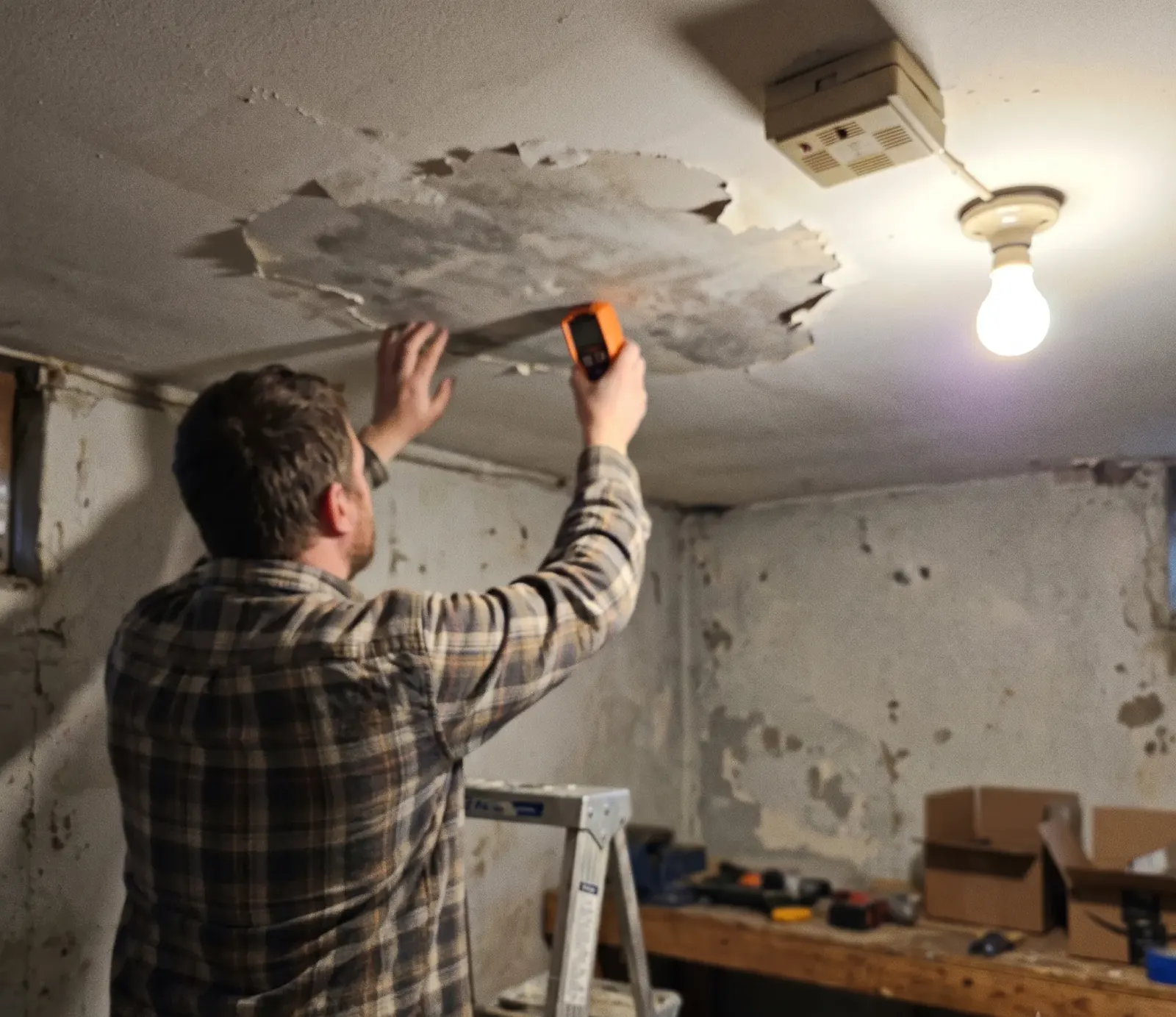
A thermal image shows a temperature pattern, not a moisture percentage. Shadows, sun exposure through a window, and even an AC vent can create a cool patch that has nothing to do with water. That's why a scan is always paired with a moisture meter reading at the spot the camera flags, rather than treated as the final answer on its own.
Where AC Condensate Lines Fit In
An overflowing condensate pan or a clogged drain line can leave a cool trail across a ceiling or closet wall long before a stain appears, which matters in Emerald Hills and Hollywood Hills homes where the air handler sits in an attic or a closet with no one checking it daily.
Finding The Edge Of A Loss
The real value of the scan is drawing a boundary. Instead of guessing how far water traveled from a burst line or an overflowing pan, an inspector can walk the wall or floor with the camera and mark where the reading changes back to normal. That boundary is what tells the licensed pros we connect you with how much material actually needs to be opened and dried.
Cast Iron Lines Under Older Slabs
The camera also earns its keep after the visible repair. Once a wall near Boulevard Heights or Driftwood has dried, a follow-up scan can show whether the cooler pattern is gone or whether a section is still holding moisture the naked eye and a quick touch would miss entirely.
Why No Demolition Is Needed First
Cutting into a wall or pulling tile to look for water is disruptive and, if the water turns out not to be there, unnecessary. A scan lets an inspector check a whole wall or floor section in minutes and narrow down exactly where an opening actually needs to happen, so the amount of material removed matches the amount of water that's really there.
What A Scan Cannot Tell You
Thermal imaging cannot tell you how long an area has been wet, whether mold has already started, or what caused the water in the first place. It marks where moisture likely is right now. Those other questions still need a moisture meter, a visual inspection, and sometimes lab testing before anyone can answer them with confidence.
When This Step Gets Skipped
Not every water event needs a thermal scan. A visible, contained spill on terrazzo near Downtown Hollywood that gets dried the same day may never need one. It becomes useful once water has had time to travel, once the source isn't obvious, or once a wall has been wet long enough that guessing at the extent would mean guessing at the repair.
Getting An Inspection Scheduled
If a wall near Hollywood Beach or anywhere else in the city has felt damp, smelled off, or shown a stain that keeps coming back, a thermal inspection is a reasonable first step before deciding what needs to be opened. It answers the question of where the water actually is, which is usually the question that matters most.
Dealing with this in your home?
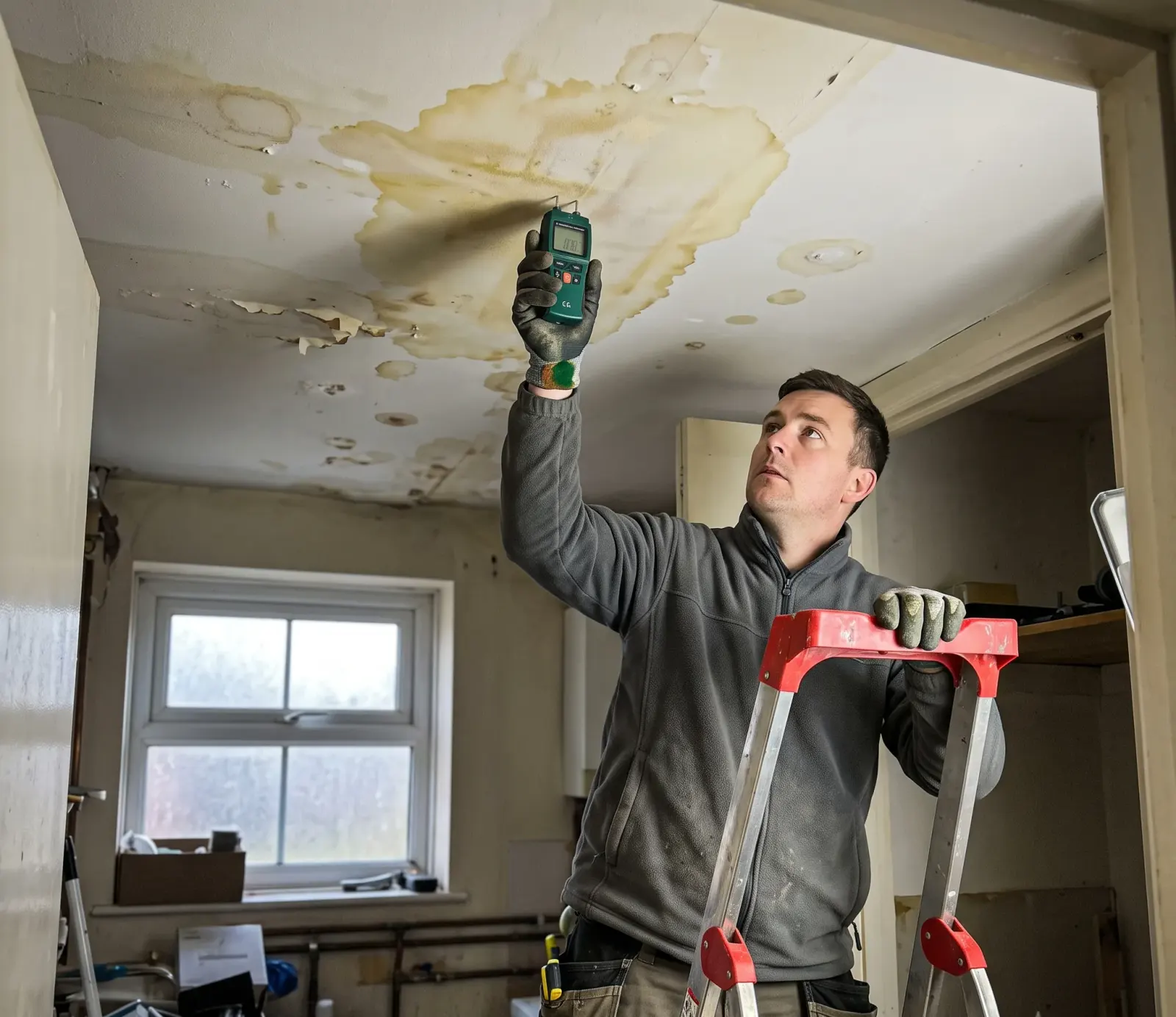
A ceiling stain days after a storm rarely marks the spot where water got in. On flat-roofed homes near Hollywood Hills or Emerald Hills, water travels along framing before it drops, so the wet insulation and drywall can sit yards from the actual break in the membrane or a clogged drain.