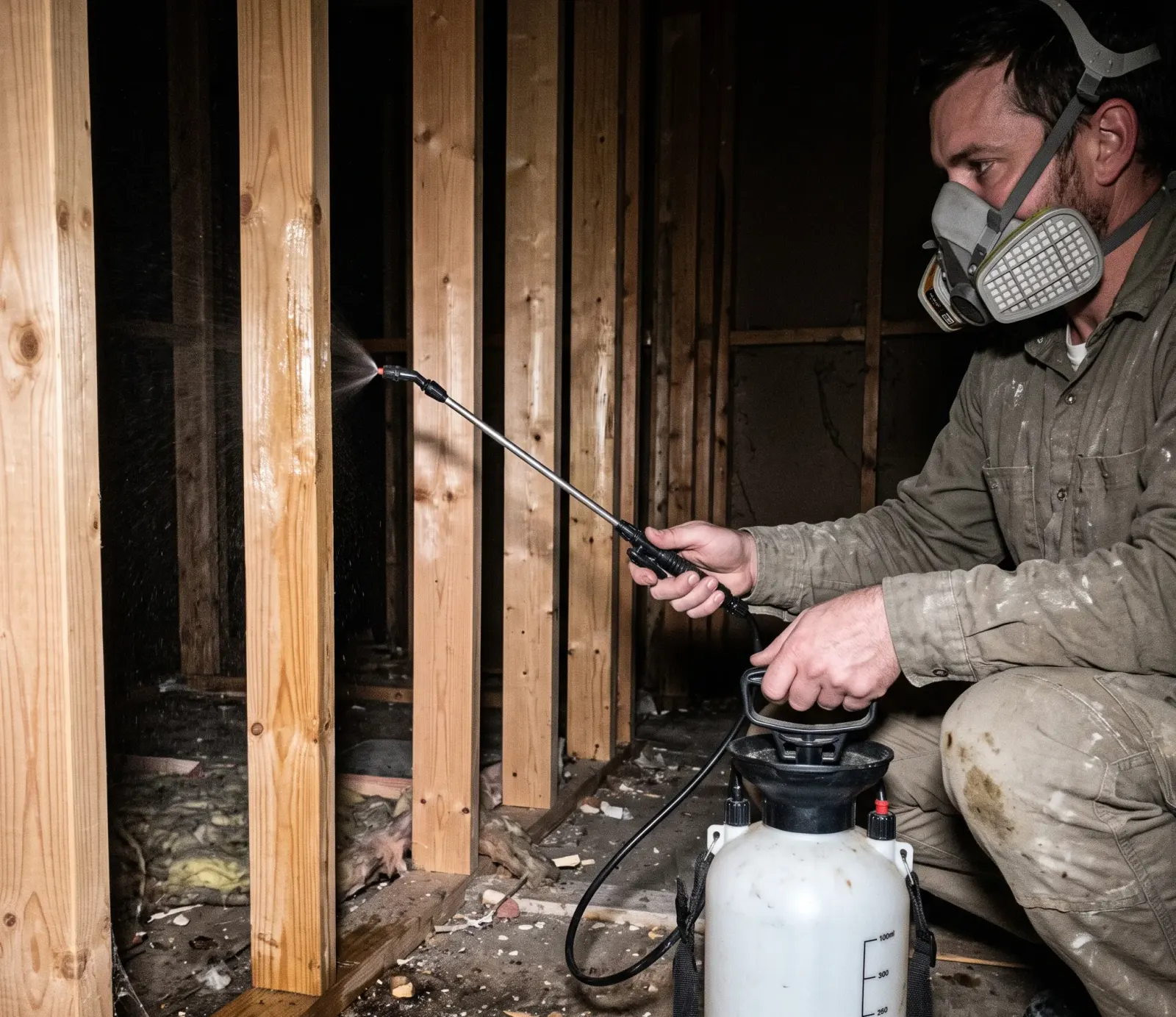
How CBS Block Construction Affects Water Damage and Drying
Why a Hollywood block home dries on a different timeline than a wood-frame house up north
Concrete block construction, standard across most Hollywood homes, absorbs water into the block cores and behind the stucco, holding moisture long after the surface feels dry. Wood-frame homes dry mainly at the stud cavity; CBS homes need the drywall opened and the block cavity itself dried from the inside, which takes longer and needs a different approach than surface drying alone.
How CBS Block Construction Holds Water Differently
Most houses in Hollywood are built from concrete block with stucco outside, not wood frame. Block behaves differently in a flood or pipe break than the framing you'd find further north, and that difference decides how a crew has to approach the drying instead of guessing at a timeline. This guide covers what makes CBS construction slower and trickier to dry once water gets into the wall itself.
Block is not a solid barrier. It's made of hollow cores, and those cores hold water long after the stucco face outside and the paint inside both feel bone dry to the touch. A homeowner in Hollywood Hills or Emerald Hills can run a hand over a wall two days after a leak and feel nothing wrong while the cores underneath are still saturated.
That hidden reservoir is the core problem with this type of wall. Surface drying, the kind that works on a wood-frame wall with fiberglass batt insulation, does almost nothing here. The water sits behind stucco on one side and drywall on the other, in a cavity an air mover can't reach and a quick moisture check on the paint won't reveal.
Why Stucco Traps Moisture Behind the Wall Finish
Inside a Hollywood block wall, drywall is usually hung on furring strips, thin wood or metal strips attached to the block, with a layer of insulation in between. When water tracks down inside that cavity, it soaks the furring, wets the back of the drywall, and pools at the bottom plate, all while the front of the wall shows nothing.
This is why a wall that took on water from a burst supply line or a slab-edge intrusion often has to be opened, not just aired out. Baseboards come off, drywall gets cut at a height above the waterline, and the block cavity behind it gets checked and dried directly rather than through the finished surface.
- Block cores hold water the surface never shows
- Stucco face can feel dry while the block underneath is not
- Drywall sits on furring strips against the wet block
- Terrazzo and tile floors hide how far water has spread sideways
- Humid outside air slows drying instead of speeding it up
- Mold gets a head start in warm, humid conditions
Terrazzo, Tile and What the Slab Hides
Terrazzo and tile floors are common in older Hollywood homes, and they complicate a CBS drying job the same way the walls do. Neither material absorbs water, so a floor in a Hollywood Lakes or Driftwood house can look completely fine while the slab underneath is still wet and water has already moved sideways under the tile toward the wall line.
That sideways movement is the part that catches people off guard. Water doesn't just sit where it landed. It follows the path under the hard flooring to the perimeter walls, which is exactly where it meets the bottom of the block cavity described above and gives the wall a second source of moisture to deal with.
- Baseboard and lower drywall removed to reach the block cavity
- Small access holes drilled low in the wall for airflow
- Air pushed into the block cavity, not just across the room
- Dehumidifiers doing the actual drying work in a closed space
CBS Drying Timeline Compared to Wood-Frame Homes
South Florida's outdoor air is humid most of the year, so opening windows in a Hollywood home to dry it out usually backfires. On a humid day, the outside air can carry more moisture into the house than the air movers are removing, which stalls the whole job and gives mold more time to establish itself in wet block and drywall.
Drying a CBS structure here means closing the space up and running dehumidifiers to pull moisture out of the air while air movers push wet air toward them, not toward an open window. For the equipment and step-by-step process used on any structure type, that's covered on the structural drying and dehumidification page rather than here.
| What You Check | Wood-Frame Home | CBS Block Home |
|---|---|---|
| Surface feel of drywall | Dry to the touch fast | Stays damp longer under paint |
| Where water actually sits | Inside wood stud cavities | Inside the block cores themselves |
| Moisture meter on the wall | Fairly reliable indicator | Tells little about the block behind it |
| Typical approach to drying | Cavity drying with air movers | Wall opened, dried from inside |
| Flooring over the loss | Often removed to check subfloor | Terrazzo or tile can mask a wet slab |
Why Opening Windows in Hollywood Makes Drying Worse
Concrete block absorbs water into the cores at the base of a wall and holds it there long after the stucco face feels dry to the touch. In a Hollywood Hills or Emerald Hills house, a meter reading on painted drywall tells a technician almost nothing about what the block behind it is holding.
That is why block walls in a flooded Hollywood home get opened from the inside rather than dried from the surface. Baseboard comes off, small holes go in low on the drywall, and air is pushed into the wall cavity itself so the block and the furring strips behind it actually give up their water.
What to Expect When a CBS Wall Gets Opened
A wood-frame wall dries mostly at the stud cavity and the drywall paper. A CBS wall in Downtown Hollywood or along Hollywood Boulevard has two separate materials working against each other: dense block that releases water slowly, and drywall on furring strips that can look fine while the block behind it stays wet for days longer.
South Florida's humid outside air makes this worse, not better. Opening windows in a block house near Young Circle does not help the block let go of its water; it just adds more moisture to the air the dehumidifiers are already working to pull down, so the closed-envelope approach matters more here than in a wood-frame house up north.
CBS Construction Quick Facts
- Most Hollywood homes are concrete block with stucco exteriors
- Block holds water in its cores, not just on the surface
- Drywall on furring strips sits directly against the wet block
- Terrazzo and tile floors can mask a wet slab underneath
- Humid air outside means windows-open drying rarely works here
- Mold risk climbs faster in warm, humid conditions
Frequently Asked Questions
Why does my block house still feel damp after days?
Because the water isn't just on the surface. It's sitting inside the hollow cores of the concrete block behind your stucco and drywall, where a surface check can't find it. In Hollywood's humid climate that trapped moisture also gives mold a head start, which is why block walls usually need to be opened and dried from the inside.
Do you have to cut open my drywall to dry it?
Not reliably. A moisture meter reading on painted drywall tells you about the drywall, not about the concrete block behind it. In CBS construction common throughout Hollywood, the block can still be wet even when the finished wall surface reads dry, so the wall often needs to be checked directly rather than through the paint.
Is concrete block worse for water damage than wood framing?
Terrazzo and tile don't absorb water, so a floor in an older Hollywood home can look untouched while the slab underneath is saturated. Water also tends to move sideways under hard flooring toward the walls, which means a small visible spill can leave the perimeter of the room wetter than the center where the water landed.
Why won't opening the windows help dry my house?
Concrete block holds water inside the cores and behind the stucco well after the wall face feels dry, so a moisture reading on the paint tells you little about the block underneath. Drywall inside sits on furring strips against that block, so a wet CBS wall in a Hollywood home usually gets opened from the inside rather than dried through the surface, since the water has nowhere else to go and no air mover can reach it there.
Can tile floors hide water damage underneath them?
Usually yes, above the waterline where the drywall and furring strips got wet. Because CBS walls hold water in the block cores and behind the wall finish, cutting the drywall and checking the cavity directly is often the only way to confirm the block itself, not just the visible surface, has actually dried out.
Have Water Damage in a Block Home Near Hollywood Lakes or Emerald Hills?
If your CBS home in Hollywood took on water near Young Circle, Emerald Hills, or Hollywood Lakes, get someone to open the wall and check the block before you close it back up. Call now to get a same-day inspection scheduled.
Call (954) 676-1222