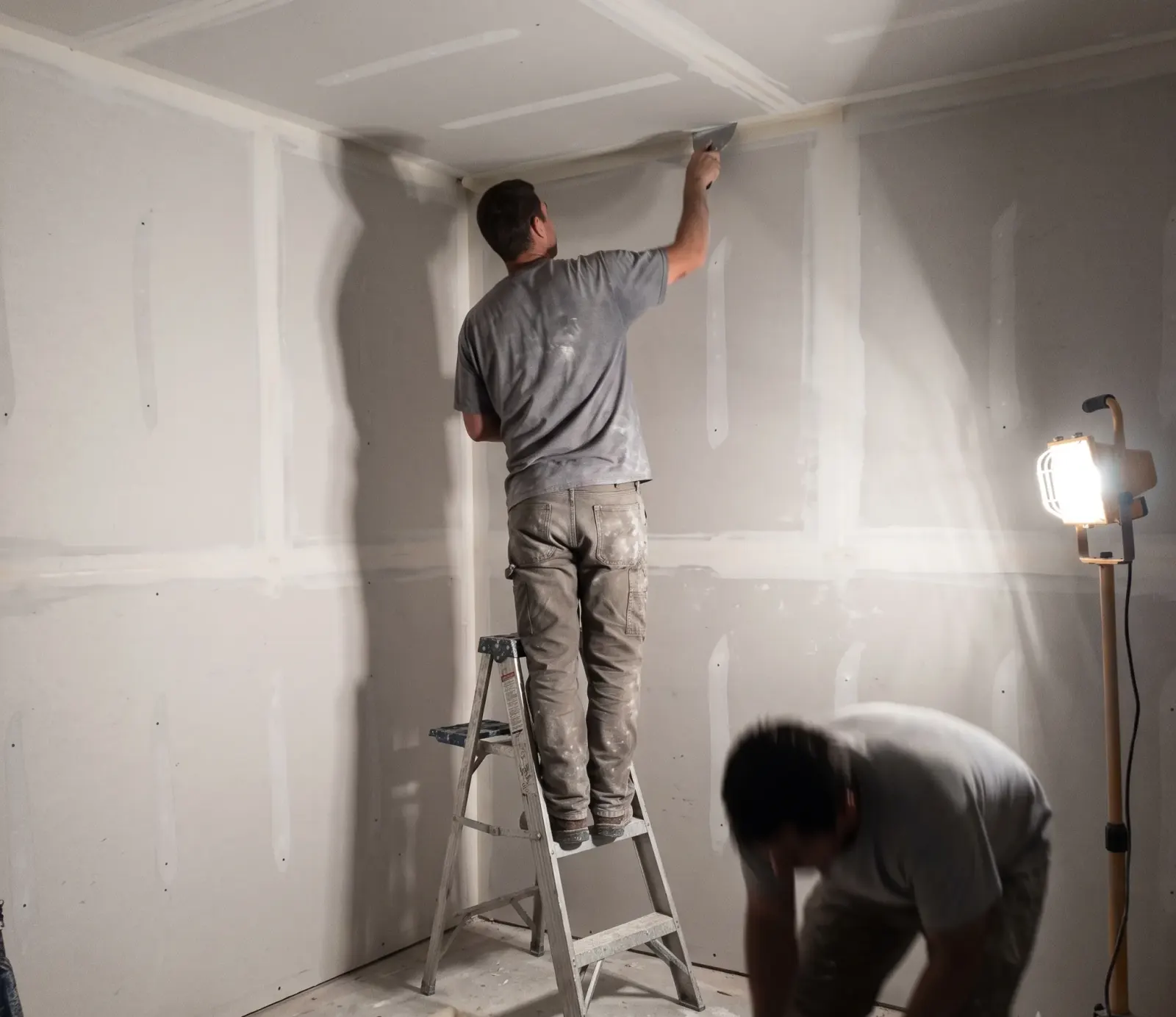
What Happens During Reconstruction After Water Damage in Hollywood, FL
What actually happens once a Hollywood home moves from drying to rebuilding
Reconstruction is the rebuild phase after a Hollywood, FL home has fully dried out: replacing drywall, insulation, flooring, cabinets, and trim that were removed or damaged, then a final walkthrough to confirm the repair matches the home's original layout and finish before the project is considered closed.
What Comes After the Drying Equipment Leaves
Reconstruction starts once moisture readings on the block, framing and subfloor come back within normal range, not before. In Hollywood homes, that means the concrete block cores and the stucco furring behind the drywall have to read dry, not just the painted surface. Rebuilding over a wall that still holds water in the block traps that moisture behind new materials for good.
Drywall goes back further than the water line reached, since the paper facing wicks moisture upward beyond what looks wet. A tape measure and a moisture meter decide the cut height, not a guess at eye level. In Hollywood's concrete block houses, the drywall sits on furring strips against the block, so the strips get checked too before anything new goes up.
Trim, baseboards and door casings usually come out during demolition rather than being saved. Baseboard nailed tight to a wet wall holds moisture against the drywall paper long after the room feels dry, so pulling it early is part of drying, and putting it back is one of the last rebuild steps once paint is finished.
Removing and Replacing Drywall and Framing
Flooring choice matters more here than the material itself suggests. A lot of Hollywood houses built mid-century have terrazzo or tile set straight onto the slab, and neither one absorbs water, so a floor that looks fine can be sitting over a slab and wall line that stayed wet underneath it. Rebuild crews check that edge condition before resetting or replacing any hard flooring.
Baseboards, casing and any built-in cabinetry that touched the water usually come out during this phase rather than being reused, since particleboard and MDF swell and do not return to their original shape once wet. Solid wood trim can sometimes be saved and reset. The decision gets made piece by piece, not as a blanket rule for the whole room.
- Framing and stud repair where wood or metal was compromised
- Insulation replacement inside opened wall cavities
- Drywall hanging, taping, texture matching, and paint
- Baseboards, door casing, and trim reinstalled or replaced
- Flooring removal, subfloor check, and new flooring installed
- Final walkthrough and documentation before the job closes
Flooring: Terrazzo, Tile, and What Sits Beneath It
Paint and texture matching sound minor but take real time on an older Hollywood house, since stucco texture and interior wall texture from a 1960s or 1970s build often don't match anything sold today. The licensed pros a homeowner connects with for this stage typically feather new texture into the old rather than trying to match it edge to edge.
Cabinets, baseboards and any built-ins removed during the water event go back in after paint, and doors get rehung last since swelling from humidity can change a door's fit slightly even after everything reads dry. This sequencing is the same whether the loss was in a Driftwood bungalow or a condo near the Intracoastal Waterway.
- Terrazzo and tile that survived structurally but need slab drying first
- Carpet and pad, almost always replaced rather than dried
- Laminate and engineered wood, usually removed once swollen
- Cabinet bases below the waterline versus uppers left untouched
Rebuild Timeline by Room and Damage Extent
Final inspection means someone checks framing, drywall and flooring against the same moisture standard used to clear the space for rebuild in the first place, not just a visual walkthrough. Photos and moisture logs from that inspection are what a homeowner in Hollywood, Liberia, or Boulevard Heights typically needs on file if a question about the repair comes up with an insurer later.
A rebuild is considered finished when the space matches its pre-loss condition and every material used in reconstruction reads dry on follow-up, not on a fixed calendar day. Humidity in Hollywood works against a fast close-out here, since a house closed back up too soon can trap residual moisture that a dry climate would forgive and this one won't.
| Damage Scope | Typical Timeline | What Drives the Variance |
|---|---|---|
| Wet drywall, one room, no block cavity opened | 3 to 5 days | Cut, patch, texture, and repaint only |
| Block wall opened, insulation and furring replaced | 1 to 2 weeks | Depends on stucco access and paint cure time |
| Terrazzo or tile floor lifted at the wall line | 2 to 3 weeks | Slab must read dry before new flooring sets |
| Kitchen or bathroom cabinetry removed and rebuilt | 3 to 5 weeks | Cabinet lead times often outlast the drywall work |
| Whole-house loss with multiple rooms opened | 6 to 10 weeks | Permitting and contractor scheduling add the most delay |
Final Inspection, Moisture Checks, and Sign-Off
Concrete block walls opened for drying stay open until the studs, furring strips, and insulation cavities read dry on a moisture meter, not just dry to the touch. In Hollywood's block construction, the finish coat can feel dry days before the core does, which is why the licensed pros we connect you with re-check readings before closing a wall.
Once moisture readings hold steady, rebuild starts with framing repairs, then insulation, then drywall hung, taped, and finished to match the original texture. Baseboards, trim, and paint come last. On a Hollywood Lakes or Emerald Hills home with older plaster details, matching texture takes more care than a straight drywall patch.
Paying for Rebuild: Insurance, Contractors, and Timing
Flooring choice depends on what was under the water. Terrazzo and tile laid directly on the slab often survive a loss structurally, but grout lines and the slab underneath still need to dry fully before any new adhesive goes down. Carpet and pad almost always get replaced rather than dried and reinstalled.
Cabinets, especially particleboard kitchen bases, swell and delaminate from standing water and rarely get salvaged below the waterline. In a Driftwood or Liberia bungalow with original cabinetry, that can mean rebuilding lower cabinets while keeping uppers that never got wet, matched as closely as the existing finish allows.
Rebuild Facts at a Glance
- Rebuild starts only after moisture readings hold steady
- Block wall cores dry slower than the surface finish
- Terrazzo and tile can hide a wet slab underneath
- Particleboard cabinet bases rarely survive standing water
- Final walkthrough confirms the repair matches the original layout
- Documentation from rebuild matters for any insurance follow-up
Frequently Asked Questions
How do I know my house is dry enough to rebuild?
Rebuild starts once drywall, framing and flooring test dry, not on a set day count. In a typical Hollywood home that follows drying equipment removal, but block walls can hold moisture in the cores longer than the drywall in front of them, so the pros doing the check confirm the wall itself, not just the surface, before closing it back up.
Will my terrazzo floor survive a water loss?
Usually not entirely. Water-damaged drywall is cut back past the visible stain line because the paper facing wicks moisture further than it shows, especially on drywall hung over furring strips against block, common in older Hollywood Hills and Emerald Hills houses. Sound, dry sections above the cut line are typically left in place and patched rather than replaced.
Do kitchen cabinets always need to be replaced?
Terrazzo and tile don't absorb water the way drywall or carpet does, so a floor in a Hollywood house can look untouched while the slab edge and wall line beneath it stayed wet. Rebuild crews check that edge condition and the slab moisture level before resetting the same tile or terrazzo, since sealing over a still-wet slab causes problems later.
How long does the rebuild phase usually take?
Texture and paint matching is one of the slower parts on an older Hollywood property, since stucco and interior wall texture from decades past often isn't sold in a matching product today. The usual approach is feathering new texture into the old edge rather than trying for an exact seam, which reads fine once painted.
Will the drywall texture actually match the rest of my house?
The rebuild is finished when materials used in reconstruction test dry on a follow-up check and the space matches its condition before the loss, not on a fixed schedule. Keep the moisture logs and photos from that final inspection; homeowners in Hollywood neighborhoods like Liberia or Boulevard Heights sometimes need that record later if an insurer has questions.
Ready to talk through a Hollywood rebuild plan?
If your Hollywood home just finished drying out and you need the rebuild done right, call for a straightforward walkthrough and a written scope from the licensed pros we connect you with.
Call (954) 676-1222