A homeowners policy in Hollywood covers wind and, often, wind-driven rain that gets in through a broken window or a torn roof. It does not cover water that rises up from outside, including storm surge pushed in off the Intracoastal Waterway. That gap is where a lot of Hollywood claims get denied after a hurricane, and this article explains why.
Why surge counts as flood
Storm surge is ocean water pushed onto land by a hurricane's wind field, and it behaves like a flood the moment it crosses your threshold. Florida property insurers separate the cause of water damage into wind and flood for claims purposes, and surge is treated as flood no matter which storm pushed it toward Hollywood Beach or the Broadwalk.
What a homeowners policy actually pays
A standard homeowners policy in Florida is a wind and named-storm policy at its core. It responds when wind tears a roof or when rain follows wind through an opening the storm created. It is not built to pay when water simply rises from Port Everglades, the Intracoastal, or a storm drain and enters at ground level.
Where flood coverage actually lives
Flood coverage in Hollywood comes from a separate policy, either through the National Flood Insurance Program or a private flood carrier. NFIP policies are written and administered under federal rules, and a homeowner has to buy one before a storm forms, not after surge is already forecast toward Broward County.
NFIP versus a private flood policy
Private flood insurance has grown as an alternative to NFIP in South Florida, sometimes with different coverage limits or contents terms. Whichever a Hollywood homeowner carries, the policy has to be flood-specific. A wind policy does not stretch to cover surge just because the same hurricane caused both kinds of damage.
Why location changes the exposure
Homes near Hollywood Lakes, Emerald Hills, or the Intracoastal side of Hollywood Hills sit closer to tidal water than homes further inland toward Pines Boulevard or University Drive. Elevation and distance from open water are exactly what a flood policy underwriter is pricing, and they are why coverage gaps hit low-lying blocks hardest.
What king tides already show locally
A standard Hollywood homeowners policy responds to wind and to water that starts inside the house, but it excludes rising water that comes from outside, which is what storm surge is. That gap is why coverage for surge damage sits in a separate flood policy, either through the NFIP or a private flood carrier, not in the homeowners contract itself, regardless of how the storm was named or tracked.
What local flood mitigation changes
A private flood policy or an NFIP policy has its own effective date, its own waiting period before a claim is valid, and its own payout structure for a home in Hollywood, separate from anything the homeowners insurer decides about wind damage on the same roof. Checking which policy actually applies matters before a surge event, not after one, since the two contracts do not fill in for each other.
How to check your own coverage
A homeowner who assumes a standard policy covers surge often finds out otherwise while filing a claim, not before. Reading the declarations page for a flood exclusion, and checking whether a separate NFIP or private flood policy exists on the property, answers the question before a storm ever reaches Port Everglades.
If a claim is denied as flood
If a claim gets denied as a flood loss under a wind-only policy, a Florida-licensed public adjuster can review the denial. Public adjuster fees are capped by state law at 10% of the claim payment in the year after a declared emergency and 20% otherwise, so the cost of a second opinion is fixed, not open-ended.
One thing that changed in 2023
Assignment of benefits agreements, once common after storm damage, are void on any Florida homeowners policy issued or renewed since January 2023. A Hollywood homeowner dealing with surge damage should expect to file and manage the claim directly rather than sign the loss over to a contractor.
Two claims, one storm
Surge damage and wind damage often arrive in the same storm and get treated as two separate claims under two separate policies. Sorting out which policy actually covers what, and documenting the water line and the source, is worth doing early. The licensed pros we connect you with can help identify what happened once the water is already inside.
Dealing with this in your home?
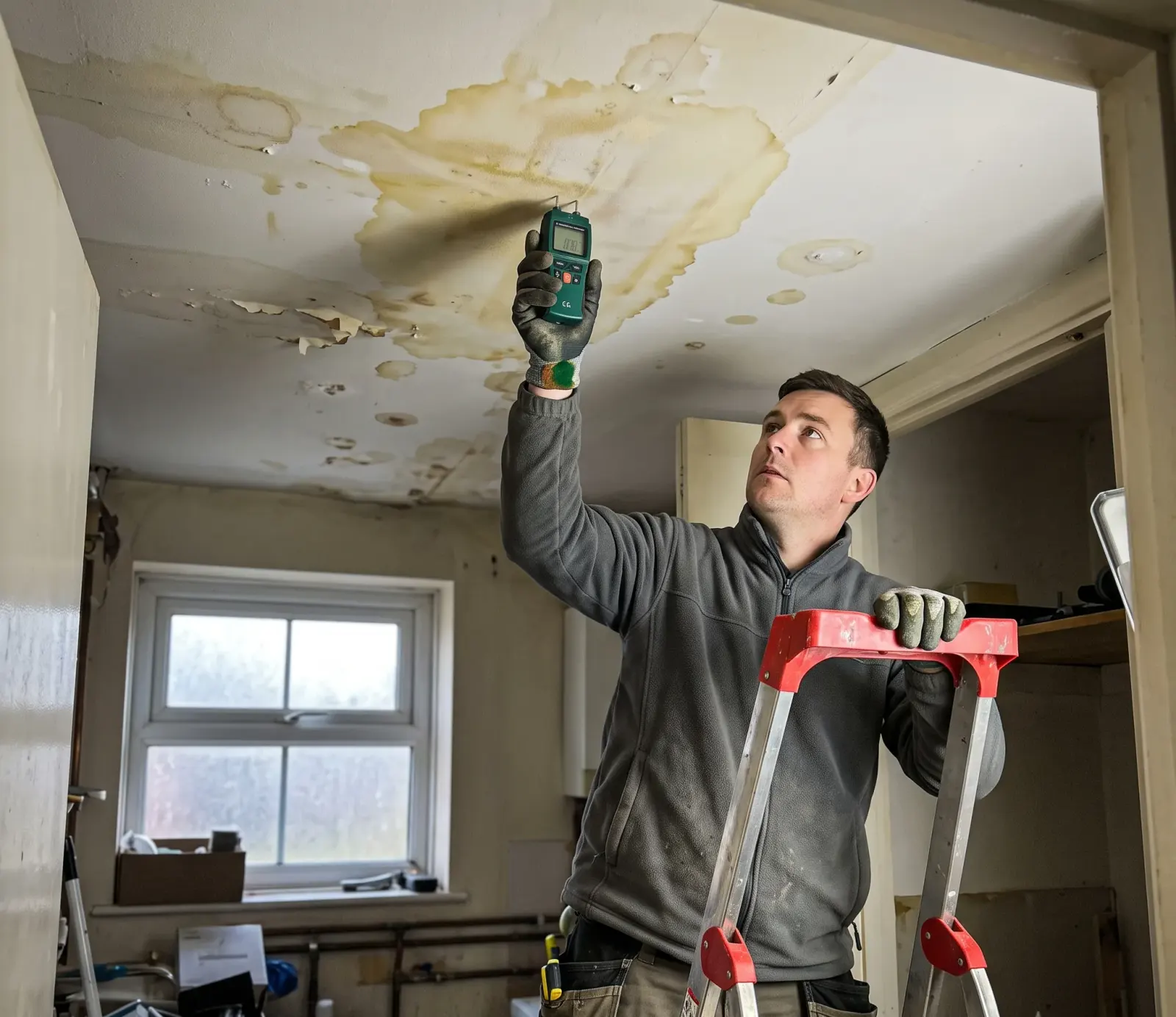
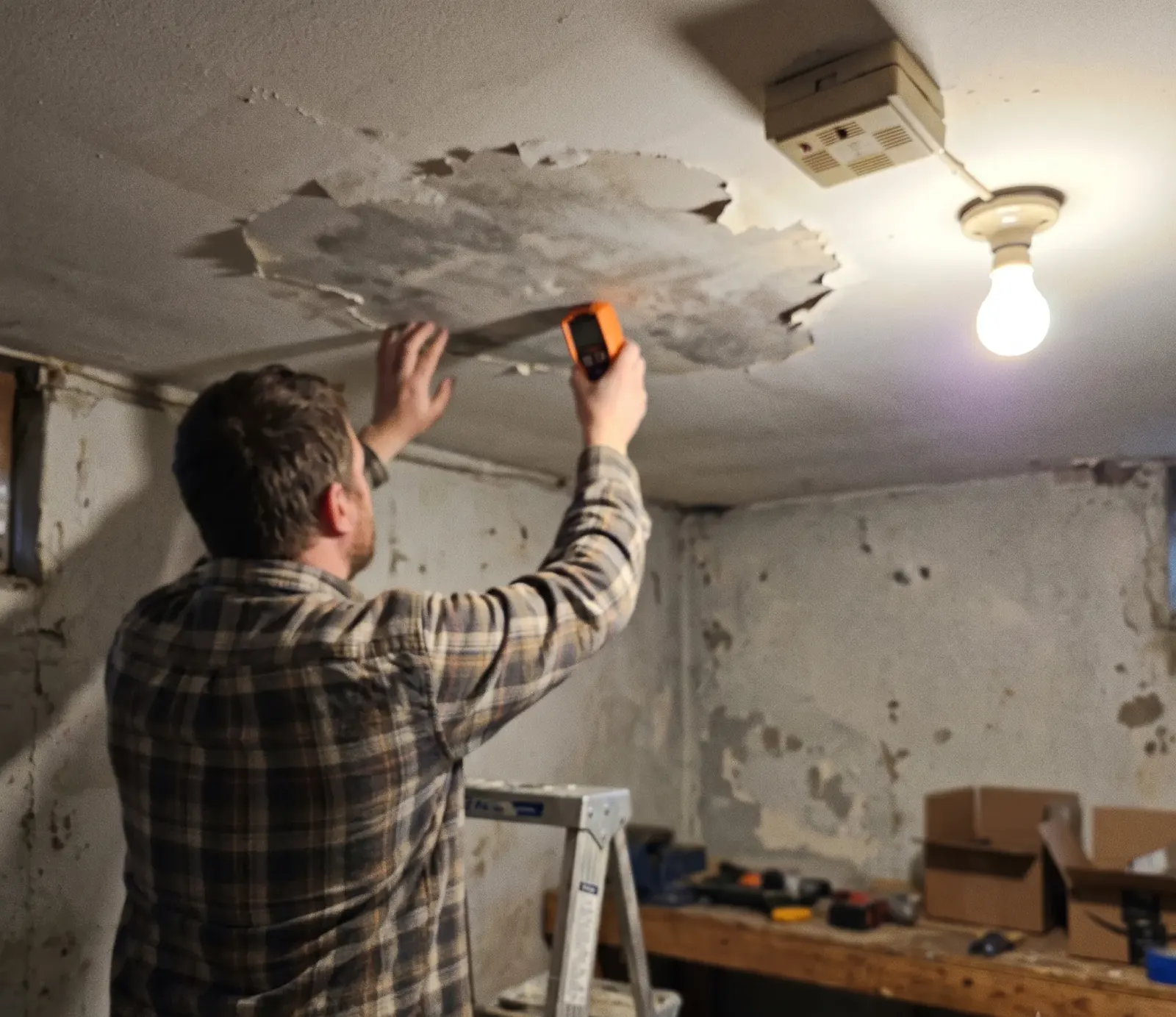
A ceiling stain days after a storm rarely marks the spot where water got in. On flat-roofed homes near Hollywood Hills or Emerald Hills, water travels along framing before it drops, so the wet insulation and drywall can sit yards from the actual break in the membrane or a clogged drain.