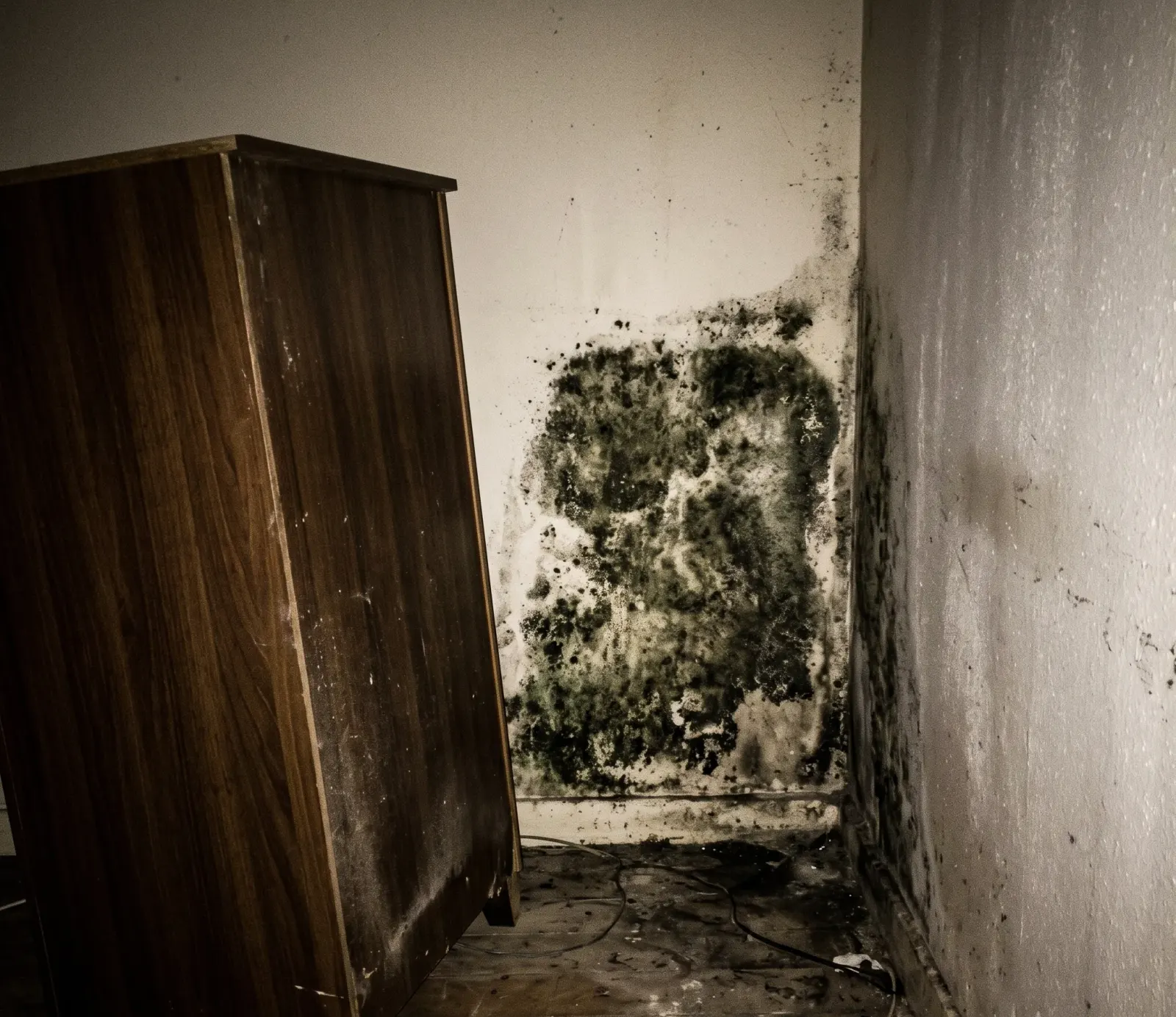
Why Mold Grows Faster in South Florida Homes
Why Hollywood's climate keeps materials close to the mold threshold all year, not just after a flood
Mold grows year-round in Hollywood because the climate rarely gives wet materials a dry period to recover in. The EPA says materials must dry within 24 to 48 hours to avoid mold, but Hollywood's rainy season, shallow water table, and constant humidity push against that window even on a normal week, so leaks and flooding here turn into mold problems faster than in drier regions.
Why Mold Grows Year-Round in a Coastal Climate
Hollywood, Florida sits in a subtropical climate where mold does not take a season off. The EPA's own threshold for growth is 24 to 48 hours on a wet material, and that window is harder to protect in a city where outdoor humidity stays high for most of the year. Indoor air here is already working close to the edge mold needs.
The mechanism is straightforward. Mold needs moisture, a food source, and a survivable temperature range, and Hollywood's building materials, drywall, wood trim, carpet padding, supply all three once they get wet. What changes indoors versus a drier climate is how long conditions stay favorable after the water event itself is gone.
South Florida's rainy season runs May through October and brings roughly two-thirds of the region's yearly rainfall, according to Broward County's own flood-conditions data. That six-month stretch overlaps hurricane season, so the months with the most standing water and wind-driven rain intrusion are also the months with the least relief from ambient humidity.
The Humidity Math Inside a Hollywood Home
Relative humidity indoors is the variable that decides whether a damp material dries out or stays wet long enough to support growth. The EPA is specific that indoor relative humidity needs to stay below 60% to prevent condensation-driven mold, a target that takes real air conditioning discipline in a Hollywood home when the outdoor air pushing against the walls and windows is humid for half the year.
Air conditioning in a coastal Broward County home is not just comfort, it is the primary tool keeping indoor humidity under that 60% line. When a system is undersized, poorly maintained, or simply switched off while a house sits empty, indoor humidity drifts upward and stays there, and materials that would dry fine in a drier climate do not get the chance.
- Rainy season from May through October raises baseline humidity for half the year
- Shallow water table keeps ground moisture high under slab foundations
- King tide flooding adds standing water in low-lying streets each fall
- Hurricane season overlaps the wettest months of the year directly
- Coastal proximity near the Intracoastal Waterway keeps outdoor air consistently humid
- Older homes near Liberia and Boulevard Heights carry aging cast iron drain lines
How Rainy Season Loads the Air and the Walls
Certain conditions inside a Hollywood home accelerate the process past the general climate baseline. A slow plumbing leak behind a wall, condensation pooling under a poorly insulated duct run, or water that entered during a king tide event and was never fully dried all create a localized humidity pocket well above the surrounding room, even in a house where the AC is working normally.
Older housing stock adds another layer. Hollywood's residential development goes back well before 1960, and homes from that era commonly used cast iron drain lines under the slab. Cast iron corrodes from the inside over decades, and a failing line can show up as slow drains or water at the slab edge long before anyone notices an obvious leak.
- Wet materials left undried past 24 to 48 hours per EPA guidance
- Indoor relative humidity climbing above the EPA's 60% threshold
- Air conditioning struggling to keep pace with outdoor humidity load
- Slow slab-edge leaks from aging plumbing going unnoticed for weeks
Conditions That Speed Growth Once Materials Get Wet
Neighborhoods across Hollywood carry different exposure profiles worth naming plainly. Areas closer to the Intracoastal Waterway and low-lying streets have documented flooding during king tide events, with one reported case near Hollywood adding an estimated three feet of water to a low-lying neighborhood street. Standing water of that kind, even outdoors, raises the humidity load on the homes around it for days afterward.
Canal-front lots in Emerald Hills and the gated streets around Hollywood Lakes hold humidity close to slabs and foundation walls longer than open, breezy blocks do, since surrounding water and dense landscaping slow evaporation. A leak or storm intrusion in one of these homes sits in already-saturated air, so the 24 to 48 hour drying window closes faster than it would inland.
| Condition | What It Does | What To Watch For |
|---|---|---|
| Relative humidity above 60% indoors | Condensation forms on cool surfaces | Run AC consistently, check for condensation |
| Wet material left past 24-48 hours | Growth window per EPA guidance opens | Dry or remove material inside that window |
| Poor airflow behind furniture or in closets | Trapped moisture with no evaporation path | Leave gaps behind furniture against exterior walls |
| AC sized or set wrong for the space | Short cooling cycles that dehumidify poorly | Set a longer, steadier cooling cycle |
| Slab-edge or under-slab moisture from old pipe | Steady low-level dampness with no obvious leak | Watch for slow drains and slab-edge staining |
What Hollywood's Rainy Season Adds to the Problem
Hollywood sits close to sea level with a shallow water table, so the ground under Hollywood Hills, Emerald Hills, and Driftwood stays damp for long stretches even without a storm. That baseline moisture works against any home already carrying a leak or a flood, since the soil and slab rarely offer a dry period to help materials catch up.
Add the rainy season that runs May through October across Broward County, when the region collects roughly two-thirds of its yearly rainfall, and indoor humidity has little chance to drop on its own. A home near the Intracoastal Waterway or West Lake Park faces this pressure for half the year, not just after a single storm event.
What This Means for a House Near the Coast
The EPA's guidance is specific: wet materials need to dry within 24 to 48 hours or mold growth becomes likely, and keeping indoor relative humidity under 60% is what prevents condensation from starting the same process on its own. In a Hollywood home, outdoor humidity often sits close to that 60% line before an air conditioner does any work at all.
That timeline does not pause for a slow leak. A cast iron drain line failing under an older home in Liberia or Boulevard Heights can leak for weeks before it surfaces at the slab edge, and every one of those days runs inside conditions already tilted toward growth rather than drying.
Fast Facts on Humidity and Mold Here
- Rainy season delivers about two-thirds of Hollywood's yearly rainfall
- EPA drying window before mold risk begins is 24 to 48 hours
- Indoor humidity above 60% supports condensation-driven mold growth
- Broward County's 2023 rainfall total was its second-highest on record
- King tide flooding peaks in Hollywood typically in October and November
- Pre-1970s homes often carry corrosion-prone cast iron drain lines
Frequently Asked Questions
Why does mold come back so fast in Hollywood?
Mold can begin growing on a wet material within 24 to 48 hours, per the EPA. In Hollywood's climate, where outdoor humidity is already high for much of the year, that window is harder to beat than in a drier region, since the air pulling moisture back into a damp wall or carpet pad never fully lets up, even after the water source itself is gone.
Does humidity alone cause mold without a leak?
The EPA sets the target at keeping indoor relative humidity below 60% to prevent condensation-driven growth. In a Hollywood home, that mostly comes down to air conditioning running consistently. A unit that is undersized, poorly maintained, or switched off while a property sits empty lets indoor humidity climb past that line quickly.
How long can wet drywall sit before it molds?
Yes. Homes near the Intracoastal Waterway and other low-lying streets have seen documented king tide flooding, including one reported case near Hollywood with an estimated three feet of standing water on a low-lying street. Standing water outdoors raises surrounding humidity for days, adding pressure on top of the region's already-high year-round baseline.
Does rainy season make mold worse indoors too?
Cast iron drain lines under the slab, common in homes built before the 1970s, corrode from the inside over decades. A failing line often shows up first as slow drains or water appearing at the slab edge rather than an obvious burst, which means the moisture problem can be building for a while before anyone notices anything is wrong.
Can a slow slab leak cause mold for weeks?
No. Hollywood Hills and Emerald Hills sit away from the coast, but the humidity driving indoor mold risk is a regional condition tied to South Florida's rainy season and year-round ambient moisture, not just proximity to water. A home near the Club at Emerald Hills golf course faces the same 24-to-48-hour drying window as one on the Intracoastal.
Have a Damp Room That Will Not Dry Out?
If part of a Hollywood home has stayed wet longer than a day or two, the drying window the EPA describes has likely already closed. The licensed pros we connect you with can check moisture levels and start drying before it becomes a mold job.
Call (954) 676-1222