Cast Iron Sewer Line Failures in Hollywood's Older Homes
What's happening under the slab in older Hollywood homes, and the signs worth catching early.
Cast iron drain pipe corrodes from the inside over decades, and in Hollywood houses built before the 1970s those original lines are now old enough to be failing. Warning signs include slow drains that don't clear with a plunger, backups that repeat on a pattern, sewer odor with no visible water, and moisture at the slab edge. This page covers the warning signs only; once a backup happens, that cleanup is handled separately.
Why Cast Iron Was the Standard for Decades
Hollywood Hills, Emerald Hills and the older sections of Hollywood Lakes hold housing stock old enough that the drain piping running beneath the slab was very likely iron rather than plastic. That material rusts from within across decades, and nothing about its condition shows from the yard or the street. A homeowner only learns the pipe has thinned when what drains through it starts behaving differently.
Neighborhoods with mid-century housing stock, including areas around Downtown Hollywood and Hollywood Lakes, carry more of this original cast iron than newer construction closer to Pines Boulevard or Sheridan Street. Age of the home is the real indicator here, not the neighborhood name itself. A house built in the same decade as its neighbors likely shares the same pipe material and the same clock running on it.
Failure rarely looks dramatic. Instead of a sudden burst, a corroding cast iron line under a Hollywood slab tends to fail slowly, through pinhole leaks and gradual narrowing of the pipe's interior as rust scale builds up. That slow failure is exactly what makes it easy to dismiss the first symptoms as a one-time clog rather than a structural problem with the line itself.
How Corrosion Builds From the Inside Out
The clearest early sign is a drain that empties slower than it used to, especially on the lowest fixture in the house, often a shower or a tub. When more than one drain in a Hollywood home slows down around the same time, that points to the shared line rather than an isolated clog. A single slow sink is not urgent; several slowing together over a few months is.
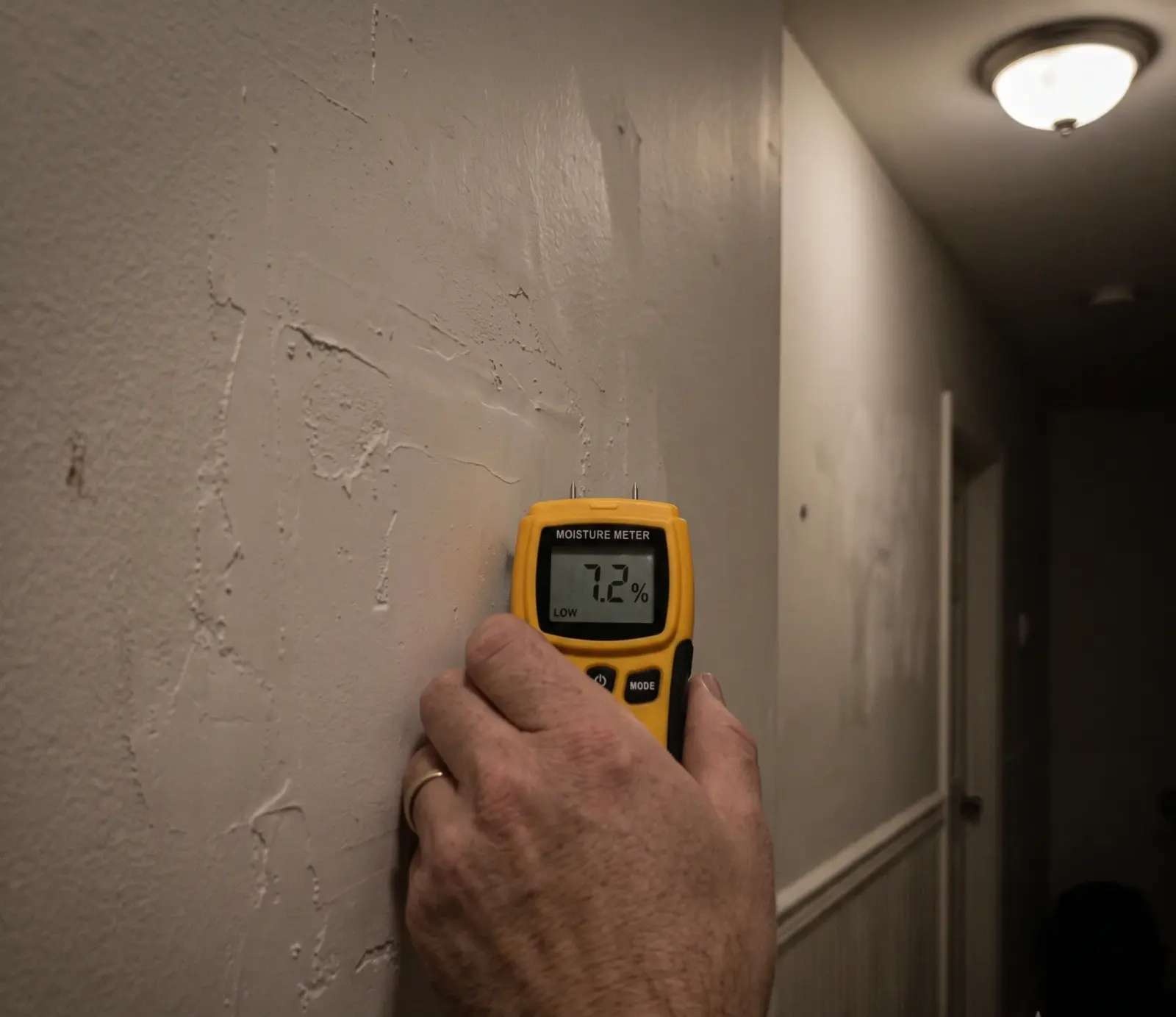
Gurgling from a toilet when a washing machine drains, or sewage odor near a slab edge or an exterior cleanout, are both signs of a line that is losing capacity rather than fully blocked yet. Water or dampness appearing at the edge of the slab, without an obvious source like a roof leak, is another sign worth taking seriously in a Hollywood house built with the cast iron drain lines common to that era.
- Drains that clear slowly even after plunging or plunging repeatedly
- The same fixture backing up on a repeating schedule
- One drain reacting whenever a different fixture is used
- Sewer odor indoors with no visible water present
- Discoloration or dampness appearing along a slab edge
- Gurgling sounds from a drain not currently in use
Warning Signs Homeowners Notice Before a Backup
The lateral line connecting a Hollywood house to the city sewer main is the property owner's responsibility on most Florida properties, not the city's. An aging lateral can be the actual cause of a backup that looks, from inside the house, like a simple blocked drain. Where that lateral runs under the slab, its condition is easy to overlook until it starts causing repeated problems.
A single sluggish sink is rarely worth worrying about. What matters is a pattern across fixtures that share one drain run — a tub, a nearby toilet, and a laundry line all slowing down in the same week points at the shared cast iron line itself, not at any one fixture. That pattern is the signal worth acting on before it becomes standing water on the floor.
- Houses built before the 1970s with original under-slab plumbing
- Homes that have never had drain lines replaced or relined
- Properties with mature trees near the lateral's likely path
- Homes with a documented history of slow or repeat backups
Reading the Signs by Age and Severity
A homeowner in Hollywood Hills, Emerald Hills, or Liberia dealing with a house from that same building era should treat repeat slow drains as worth investigating rather than repeatedly plunging or using chemical drain treatments. Chemical treatments do nothing for a structural narrowing of old cast iron and can make eventual repair work more unpleasant without solving the underlying corrosion.
A camera inspection of the line is the direct way to see the actual condition of cast iron pipe under a slab, rather than guessing from symptoms alone. That inspection shows whether the problem is scale buildup, a crack, root intrusion, or a collapsed section, which is the information that determines whether a repair or a full line replacement is the right next step.
| Sign | Likely Cause | What to Do |
|---|---|---|
| Slow drains in multiple fixtures | Scale buildup narrowing the pipe interior | Have the line scoped before it worsens |
| Gurgling from drains after flushing | Trapped air from a partial blockage | Note which fixtures react and when |
| Sewage odor near the slab or yard | A crack or joint failure below grade | Avoid ignoring intermittent smells outdoors |
| Damp or discolored slab edge indoors | Water escaping a failed joint under the slab | Treat as a plumbing issue, not just flooring |
| Backup after heavy rain specifically | A lateral partially blocked meeting a fuller main | Ask whether the lateral has been located |
The Lateral Question: Whose Pipe Is Failing
Water at a slab edge does not always mean a roof leak or a pipe under pressure. In Hollywood homes built with cast iron drain lines, that same symptom can trace to a lateral or branch line that has corroded from the inside and is now weeping through a joint under the slab.
In a lot of older Hollywood Hills and Emerald Hills homes, the drain line running to the city main sits underneath the slab, and figuring out who fixes what starts with locating that pipe. Confirming where the failure actually sits, house side or city side, has to happen before a contractor opens the floor near Hollywood Boulevard or any nearby street.
What to Do Once You Suspect an Aging Line
A single slow drain is easy to blame on hair or grease. A pattern is different: the same fixture backing up on a schedule, or one low drain reacting every time a different fixture upstream is used, points toward a shared cast iron line losing capacity rather than one clogged trap.
Sewer odor without a visible backup is worth noticing in a Hollywood home with original drain lines. A cracked or separated joint under the slab can vent gas into a room long before it lets enough water through to leave a visible stain or a standing puddle on the floor.
Cast Iron Failure at a Glance
- Cast iron corrodes from the inside, not the outside
- Lateral to the city main is the owner's responsibility
- Failure often shows as slow drains, not a sudden burst
- Location under the slab matters before anything is opened
- Backups can repeat on a pattern before they're constant
- Odor can appear before any visible water does
Frequently Asked Questions
How do I know if my pipes are cast iron?
Age alone. Homes in Hollywood neighborhoods dating to the mid-20th century and earlier were plumbed with cast iron below the slab, and that material has a finite lifespan before interior corrosion narrows the pipe and eventually opens gaps. A house near Hollywood Lakes or Liberia built in that era is a reasonable candidate for this even with no visible plumbing history, simply because of when it went up.
What causes cast iron sewer pipes to fail?
Multiple drains slowing around the same time, gurgling from a toilet when another fixture drains, sewage odor near an exterior cleanout, and dampness at a slab edge with no obvious other cause are the signs to watch for in an older Hollywood home. Any one of these alone might be minor, but several together point toward a line problem rather than a single clog.
Is the sewer lateral my responsibility or the city's?
The lateral is the line connecting the house to the city sewer main, and on most Florida properties, including in Hollywood, it belongs to the homeowner rather than the city. An old or damaged lateral can cause backups that look identical to a blocked house drain, which is why confirming where the actual problem sits matters before repair work starts.
Can a cast iron line be relined instead of replaced?
A backup that clears with a simple snake but comes back within weeks in a Hollywood home is a pattern more consistent with a structural issue in an aging line, such as scale narrowing or root intrusion, than with a one-time foreign-object clog. A camera inspection is the way to see what's actually happening inside the pipe rather than repeating the same temporary fix.
Why does my drain back up only sometimes?
No. Chemical drain treatments don't address a structural narrowing or crack in old cast iron pipe under a Hollywood home's slab, and repeated harsh chemical use can make the pipe's interior condition worse over time. If slow drains keep returning, a camera inspection to see the pipe's actual condition is a better next step than another round of chemical treatment.
Noticed a warning sign in an older Hollywood home?
Noticing slow drains, repeat backups, or sewer odor in an older Hollywood home is worth having looked at before it becomes a backup. The licensed pros we connect you with can help you figure out what's actually happening under that slab.
Call (954) 676-1222