A moisture meter is how a drying job proves it is finished rather than just guessing. In Hollywood, where outdoor humidity stays high most of the year, drywall and framing can feel dry to the touch days before the material inside actually reaches a safe reading. This page explains what pin and pinless meters measure and why the number matters more than the touch test.
Pin Meters and Resistance Readings
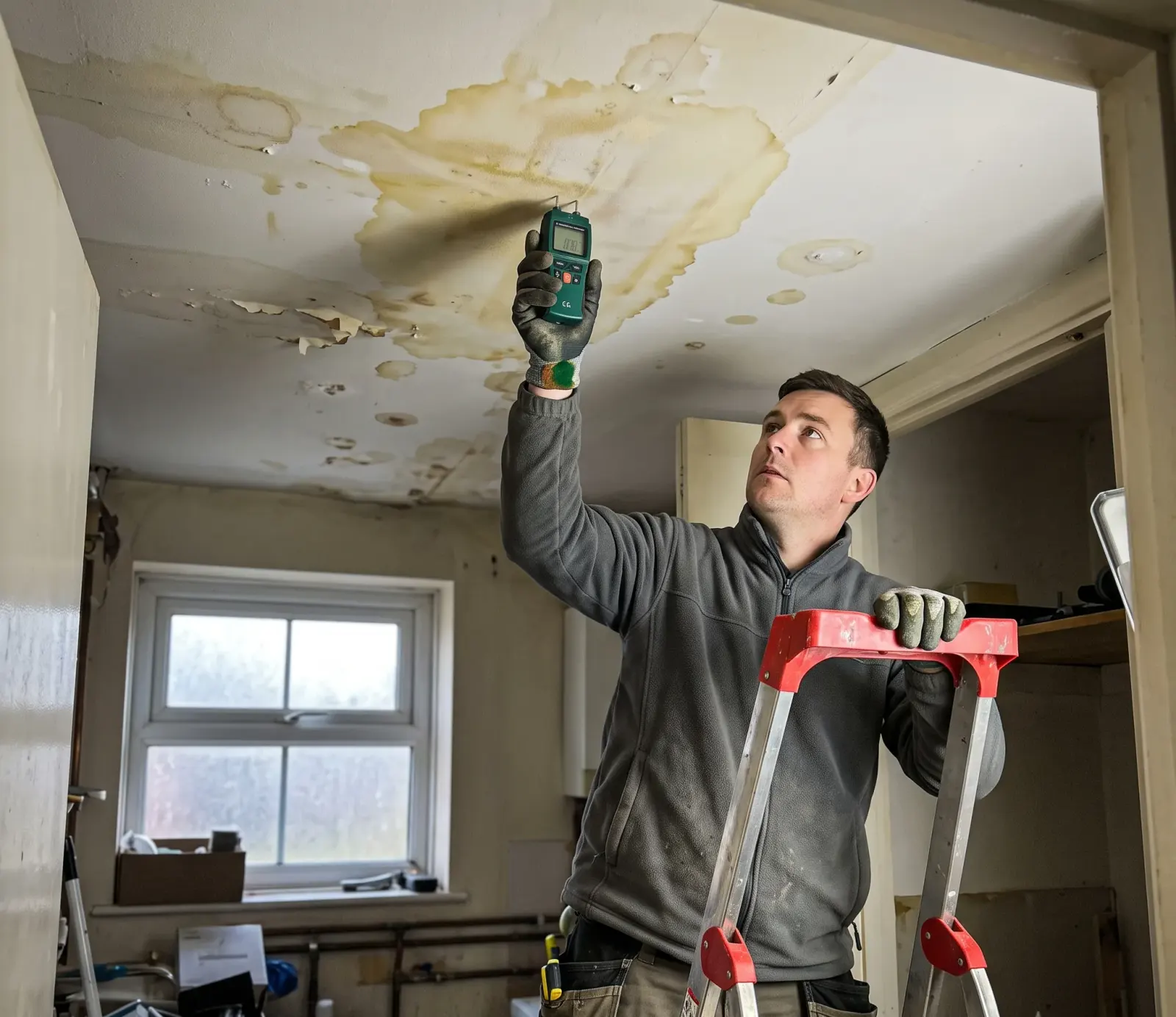
A pin meter pushes two small probes into the material and reads resistance between them. Wet wood and wet drywall conduct electricity more easily than dry material, so the meter converts that resistance into a moisture percentage. It is direct and specific to the depth the pins reach, which is useful on framing lumber but leaves small holes in finished drywall.
Pinless Meters and Surface Scanning
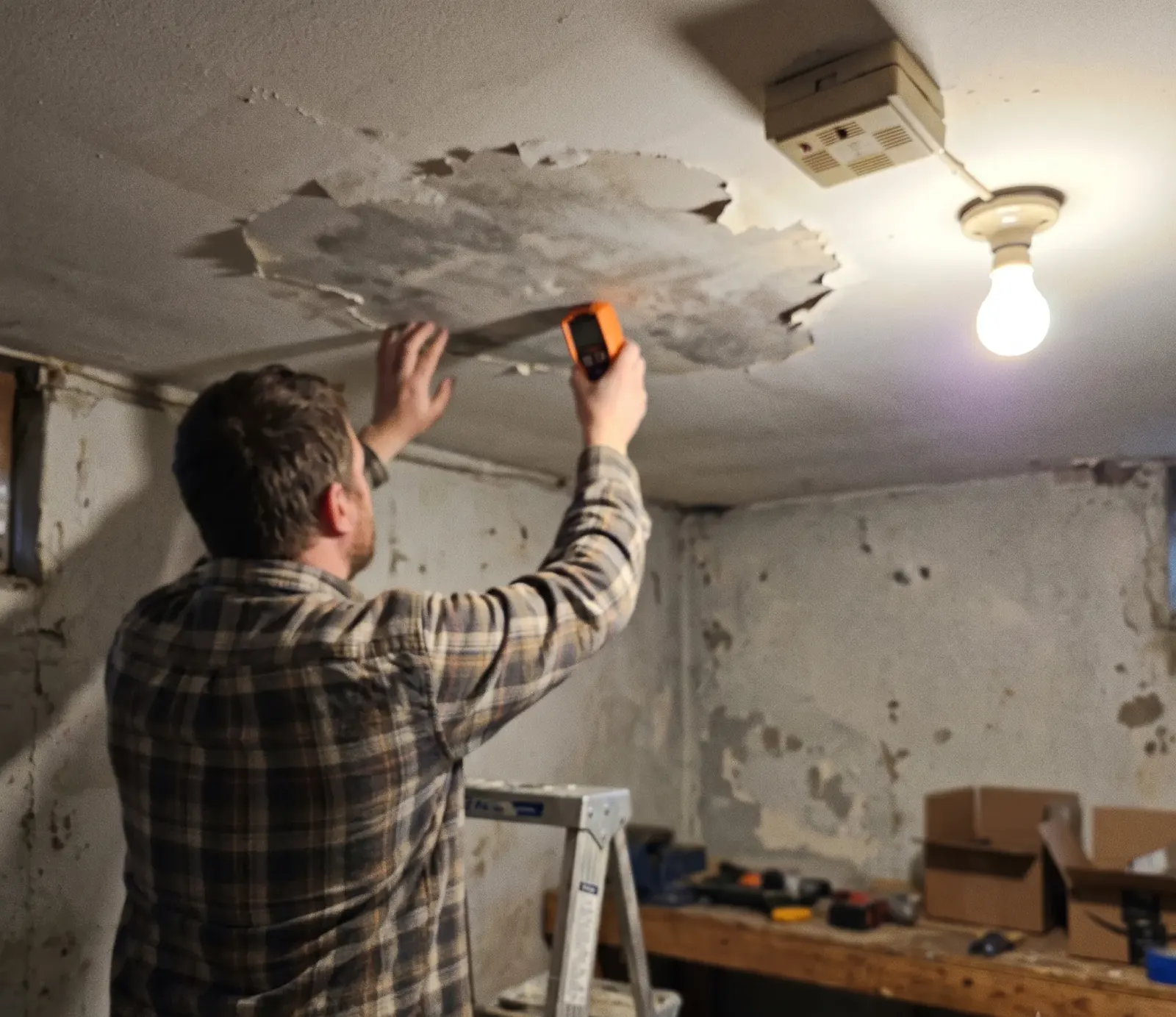
A pinless meter uses an electromagnetic sensor pressed flat against the surface and reads moisture in the material beneath it without puncturing anything. It scans a wider area faster and leaves no marks, which is why it is the first tool used on walls and floors that will stay in place. It trades some precision for speed and no damage.
Why Technicians Use Both Tools
Pin and pinless meters answer different questions on the same wet wall. The pinless style scans through drywall or plaster without marking the surface, useful for a first pass across a room in Hollywood Hills or Emerald Hills. The pin style gets a reading at a specific depth once probes are set, which matters near a slab edge where cast iron drain lines run underneath.
Different Materials, Different Standards
Different materials carry different acceptable moisture levels, so a single number does not apply everywhere. Framing lumber, drywall, and subfloor each have their own dry-standard range, and a meter reading only means something when it is compared against the correct material's range and against a dry reference reading taken from an unaffected area of the same building.
Why a Dry Reference Reading Matters
A pinless meter uses electromagnetic sensing pressed flat against a wall or floor, no holes, faster coverage. That makes it the first tool through a house in Hollywood Hills or Boulevard Heights, scanning baseboards, drywall, and flooring in minutes to map where moisture actually sits before anyone decides what has to open up.
Catching Slow AC Condensate Leaks
Air conditioning is one of the more common hidden moisture sources these meters catch early. An AC system that runs most of the year produces condensate constantly, and a blocked drain line or a rusted pan can leak slowly into a closet or attic ceiling for weeks before anyone notices a stain, long before it becomes an obvious puddle.
Older Slabs and Cast Iron Drain Lines
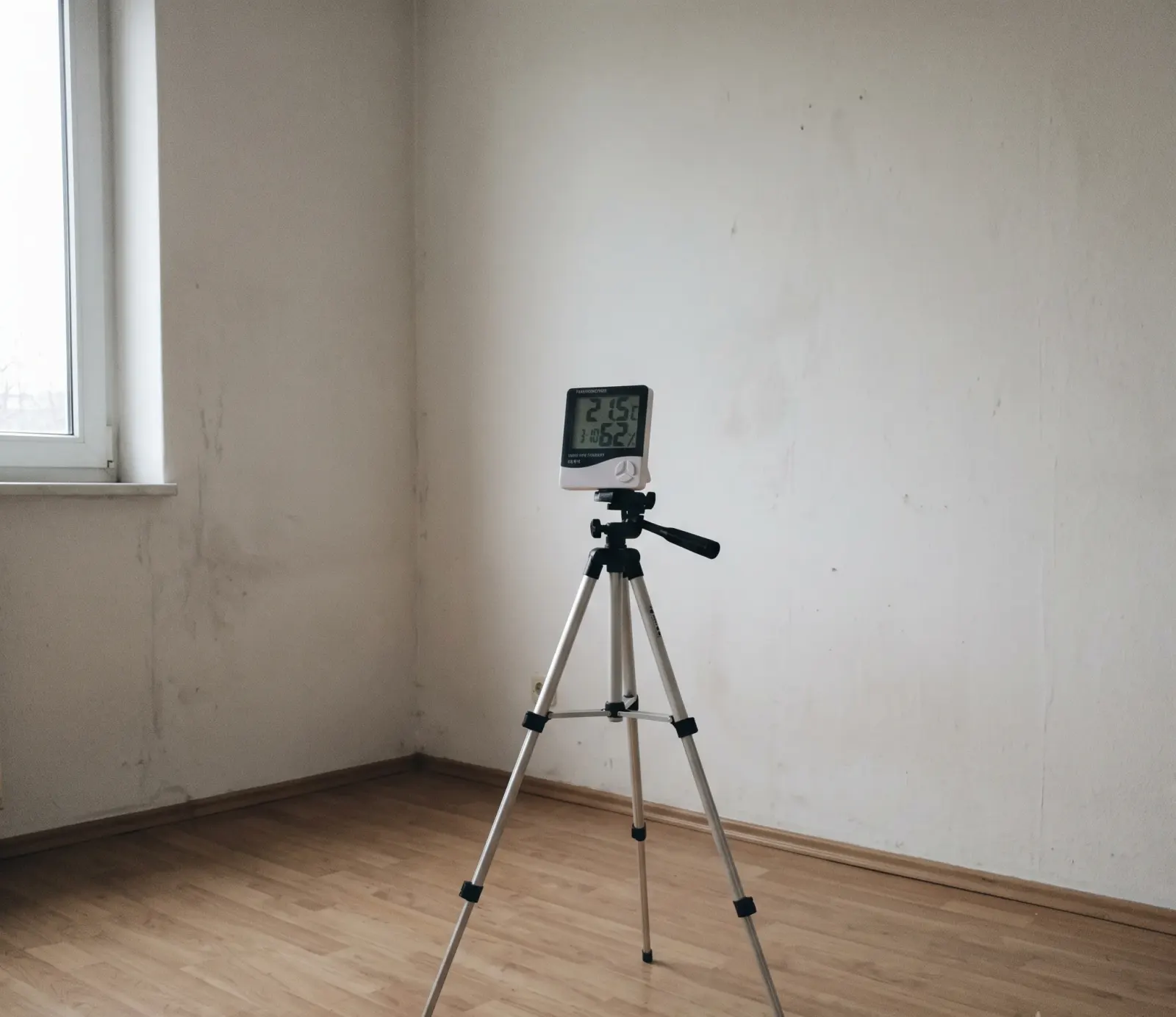
Neither reading means much alone. What matters is comparing a wet spot against a dry reference reading taken somewhere unaffected in the same house, then tracking that gap down toward zero over several days. A drywall panel near Young Circle only counts as dry once its number matches the reference, not before.
Tracking Readings Over Multiple Days
Readings are taken more than once, not just at the start. A material that measured wet on day one gets checked again as drying equipment runs, and the readings are tracked over days until each material reaches its dry standard and holds there, because a number that looks good for one hour proves nothing on its own.
Why Stopping Too Early Backfires
Stopping equipment too early is a common and costly mistake. The EPA notes that wet materials should be dried within 24 to 48 hours to keep mold from taking hold, but drying past the visible dry point and confirming with a meter is what actually prevents mold from starting in wall cavities that look fine on the surface.
Keeping a Record for Insurance
A written moisture log, taken at the same points each visit, is what a homeowner or an insurance adjuster can actually review after the fact. It turns a subjective sense that a wall feels fine into a documented record showing each material's moisture percentage over time, which matters if a claim or a dispute comes up later.
What a Meter Does Not Decide
None of this replaces the drying process itself, only measures it. Deciding how many dehumidifiers or air movers a Hollywood home needs, and how long they need to run, is a separate question handled during the actual structural drying work — the meter's only job is confirming when that work is truly done.
Dealing with this in your home?
A ceiling stain days after a storm rarely marks the spot where water got in. On flat-roofed homes near Hollywood Hills or Emerald Hills, water travels along framing before it drops, so the wet insulation and drywall can sit yards from the actual break in the membrane or a clogged drain.