Understanding Hollywood's High Water Table and Home Drainage
Why groundwater sits close to the surface across Hollywood and what that means for drainage and slab moisture
Hollywood sits over the shallow Biscayne aquifer, so groundwater stays close to the surface citywide. That leaves soil less able to absorb heavy rain, slows drying under slabs after a leak, and lets seasonal king tides push standing water into low-lying streets and yards, especially near the Intracoastal Waterway and other low ground.
Why Hollywood Sits So Close to Its Own Groundwater
Hollywood sits on the Biscayne aquifer, a shallow, highly permeable body of groundwater that USGS describes as having a water table close to the surface, with monitoring wells in Broward County set at depths of only 10 to 50 feet. That proximity matters more here than in most cities, because it changes how the ground under Hollywood Lakes, Hollywood Hills, and Emerald Hills handles rain before a homeowner ever sees standing water.
A shallow water table leaves less empty pore space in the soil to absorb a heavy downpour. When the ground is already saturated near the surface, stormwater has fewer places to go but sideways and up, which is part of why streets near Young Circle and Downtown Hollywood pool quickly during intense rain even before any storm surge or tidal factor gets involved.
None of this is unique to one block of Hollywood. From the Intracoastal Waterway east toward Hollywood Beach and inland through neighborhoods like Hollywood Lakes and Emerald Hills, the same shallow aquifer sits under the whole city, so the drainage behavior described here applies broadly rather than to a single flood-prone pocket near Young Circle or the Broadwalk.
How the Biscayne Aquifer Shapes What's Under Your Slab
Slab-on-grade construction sits directly on the ground, so whatever moisture level exists a few feet down has a direct relationship with the concrete above it. In neighborhoods like Boulevard Heights and Driftwood, a slab poured close to a water table that rarely drops far below grade is in near-constant contact with damp soil, not just after a storm.
Basements are not part of residential construction in Hollywood, and the shallow, sandy and limestone ground beneath the Biscayne aquifer is a reasonable part of why: digging deep foundations here means digging into water-bearing soil almost immediately. Slab-on-grade sidesteps that problem for the structure, but it does not remove moisture as a factor at ground level.
- Downspouts that empty next to the foundation instead of away from it
- Grading that pitches downward toward the foundation wall rather than out to the yard
- Swales or drains that stay full long after rain has stopped
- Landscaping beds built up against the slab edge
- Driveways or patios that trap water against exterior walls
- Low points in the yard that hold standing water for days
Why Slab-on-Grade Homes Feel a Shallow Water Table First
King tides are the highest predicted tides of the year, driven by the alignment of lunar and solar gravity with Earth's orbit. South Florida sees a smaller cycle in spring and its strongest flooding typically in fall. Streets in Hollywood have flooded during these events, with one low-lying neighborhood reporting an estimated three feet of added water.
Coverage from October 2025 described king tides swamping South Florida streets from Hollywood to Pompano Beach, and separate reporting put two feet of standing water in Hollywood roads and driveways during an earlier king tide cycle. A shallow water table does not cause king tides, but it means the ground has less spare capacity to carry that added water away quickly.
- Water staining or darkening along the bottom of interior walls
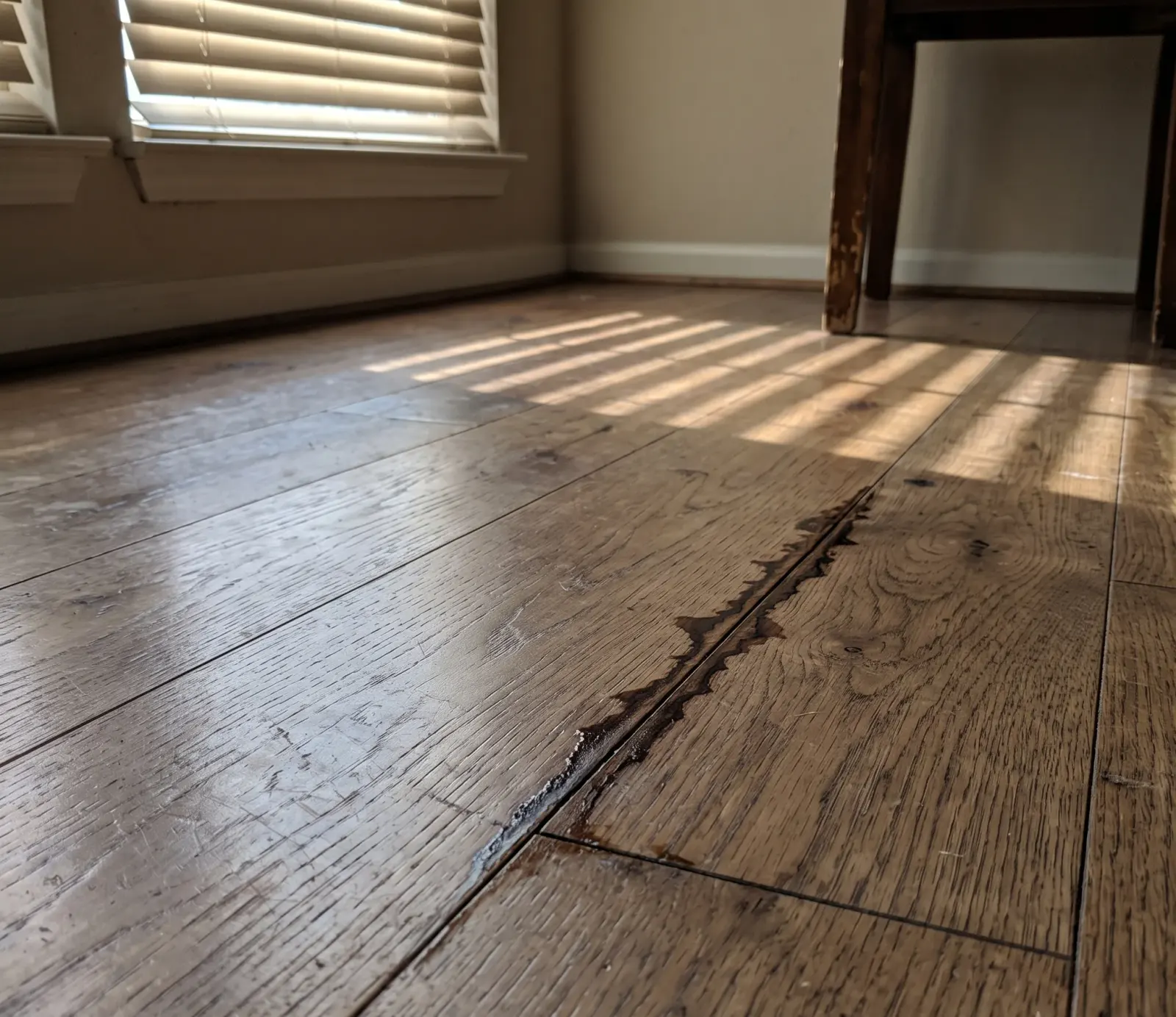
- Flooring that feels soft, cups, or separates near exterior walls
- A musty smell that returns after cleaning or fans run
- Baseboards or drywall that stay damp days after a storm passes
Drainage Behavior by Situation, Compared
None of this means every wet spot near a Hollywood home traces back to groundwater. A blocked air conditioning condensate line, a rusted drain pan, or an aging cast iron lateral under the slab can all produce water at a baseboard or slab edge that looks identical to a drainage problem from outside. Sorting out which one is happening is a diagnostic step, not a guess.
That gap between outdoor conditions and what a building can dry out on its own is the real issue. A slab that stays damp along its perimeter, a closet holding an air handler, or a wall cavity near grade in a home in Hollywood Hills or Boulevard Heights all sit closer to the point where damp materials stop drying and start supporting growth, simply because the surrounding air rarely gets dry enough to help pull moisture back out.
| Situation | What's Happening | Where It Shows Up |
|---|---|---|
| Heavy rain on saturated ground | Runoff pools instead of soaking in | Street and yard flooding near Hollywood Lakes canals |
| King tide week, October or November | Tidal water pushes back through storm drains | Reported two to three feet on some low blocks |
| Slab edge staining with no plumbing leak found | Groundwater wicking upward through porous fill | Common in older Downtown Hollywood and Liberia homes |
| Musty smell returning after every dry-out | Moisture re-entering from below rather than above | Points to ground moisture, not a one-time spill |
| New construction near the Intracoastal Waterway | Fill depth and grading matter more than usual | Worth checking before finishing any ground-level room |
What King Tide Season Adds to a Drainage Problem
Hollywood's ground has little spare room to absorb a heavy downpour. The Biscayne aquifer sits close to the surface across Broward County, so soil that is already near saturation drains slower than a homeowner expects. Water that would sink away in drier ground instead lingers near the slab, under landscaping, and along low points in a yard.
That same shallow water table changes what happens after a leak. Moisture below a slab has fewer places to go, so it moves sideways and shows up at slab edges, along baseboards, or under flooring far from where a pipe actually failed. Drying below-grade concrete takes longer here than in places with deeper, drier ground underneath.
What a Homeowner Can Actually Check Before Calling Anyone
King tide season adds a seasonal push to this year-round condition. Broward's highest tides typically arrive in the fall, and Hollywood streets have flooded during past cycles, with one low-lying neighborhood seeing an estimated three feet of standing water. Homes near the Intracoastal Waterway or other low ground feel this first.
None of this means every home floods every season. It means the margin for error is thinner. A clogged drain, a low swale, or a downspout aimed at the foundation matters more in Hollywood than it would somewhere with deeper, more absorbent soil, because the ground here is already carrying more water than it looks like.
Groundwater Facts for Hollywood Homeowners
- Sits above the shallow Biscayne aquifer
- Low-lying elevation, single digits to low double digits in feet
- Fall king tides bring the year's highest flooding risk
- Homes built on slab-on-grade sit close to a shallow water table
- Soil has limited extra capacity during heavy rain
- Below-slab moisture drains and dries more slowly here
Frequently Asked Questions
Why does my yard stay wet so long after it rains?
Yes, in a general sense. USGS documents a shallow water table under the Biscayne aquifer across Broward County, including Hollywood, with monitoring wells as shallow as 10 to 50 feet. That proximity limits how much rain the ground can absorb before water pools at the surface, which is a factor separate from tides, storms, or any single property's drainage setup.
Is a high water table the reason my slab feels damp?
No. A high water table is a groundwater condition affecting the soil under and around a home. A slab leak is a plumbing failure, often in an aging cast iron line, that releases water from inside the pipe system. They can produce similar signs at a slab edge, but the cause and the fix are different, and slab leak diagnosis is handled separately from groundwater intrusion.
Do king tides actually reach neighborhoods away from the beach?
Hollywood homes are built slab-on-grade, and basements are not part of local residential construction. The shallow water table and sandy, limestone-influenced ground beneath the Biscayne aquifer make deep excavation impractical across South Florida generally, which is a reasonable explanation even though no single source states this as a Hollywood-specific rule.
Can a high water table cause water damage without a leak?
Yes. During the higher tide cycles each fall, streets in low-lying parts of Hollywood have taken on standing water measured in feet rather than inches, and driveways and yards near the Intracoastal Waterway or canal-front blocks like Emerald Hills fill faster than higher-elevation blocks. If your property sits near tidal water, treat a forecasted high-tide event as a reason to check doors, thresholds, and low vents before it arrives, not after.
Why does drying take longer in a home built on a slab?
It can be either, and telling them apart matters. Condensate lines from air conditioning, which runs most of the year here, are a common indoor source and leak slowly. Groundwater intrusion tends to show as persistent slab-edge moisture without an obvious indoor source. Confirming which one is happening is a diagnostic question before any drying work starts.
Seeing Water at Your Slab Edge With No Clear Source?
If groundwater is showing up at a slab edge or a floor in Hollywood Lakes, Emerald Hills, or anywhere between Young Circle and the Intracoastal, get it looked at before drying costs climb. Call and describe what you're seeing — the pros we connect you with can help sort out what's actually happening.
Call (954) 676-1222