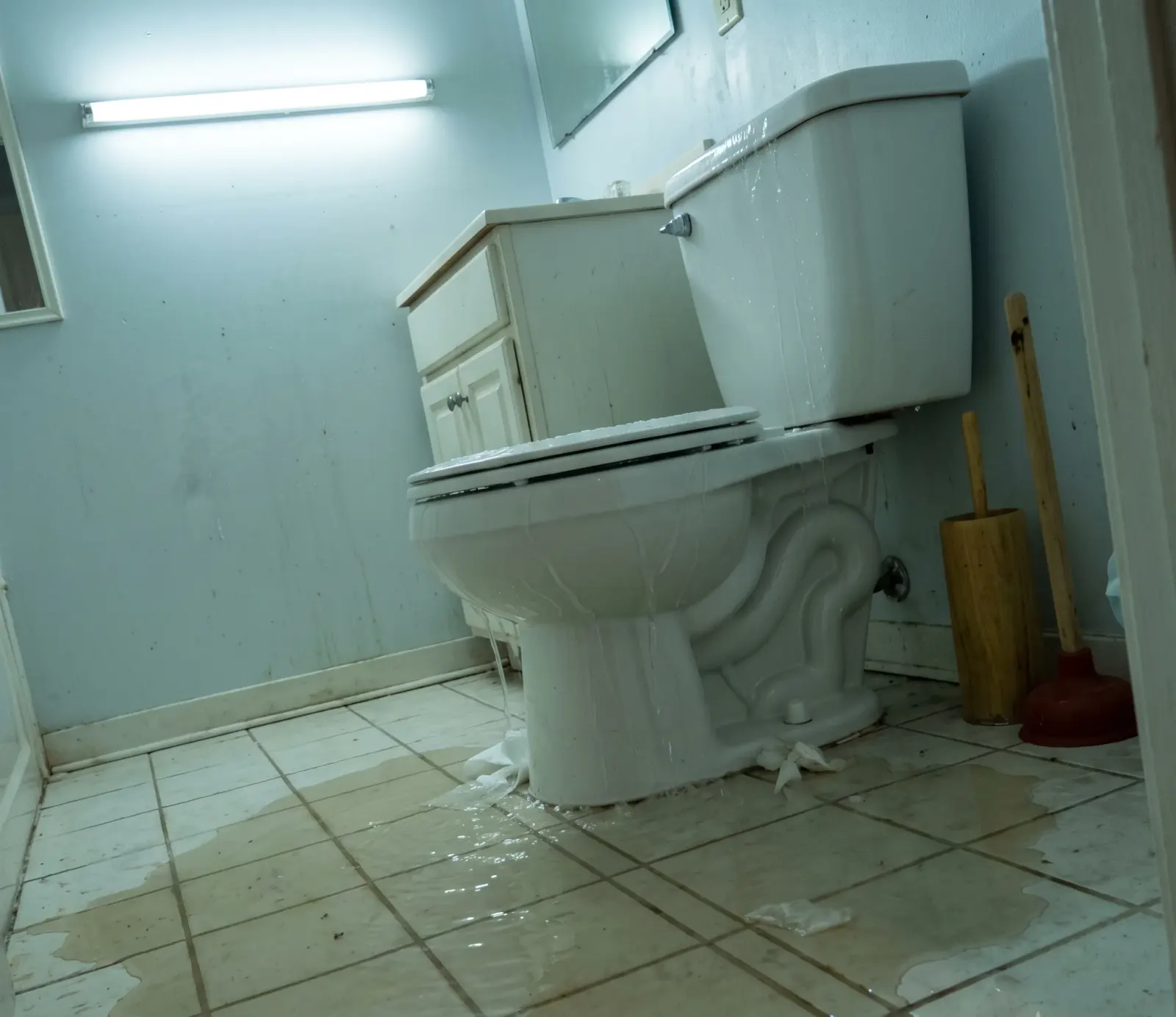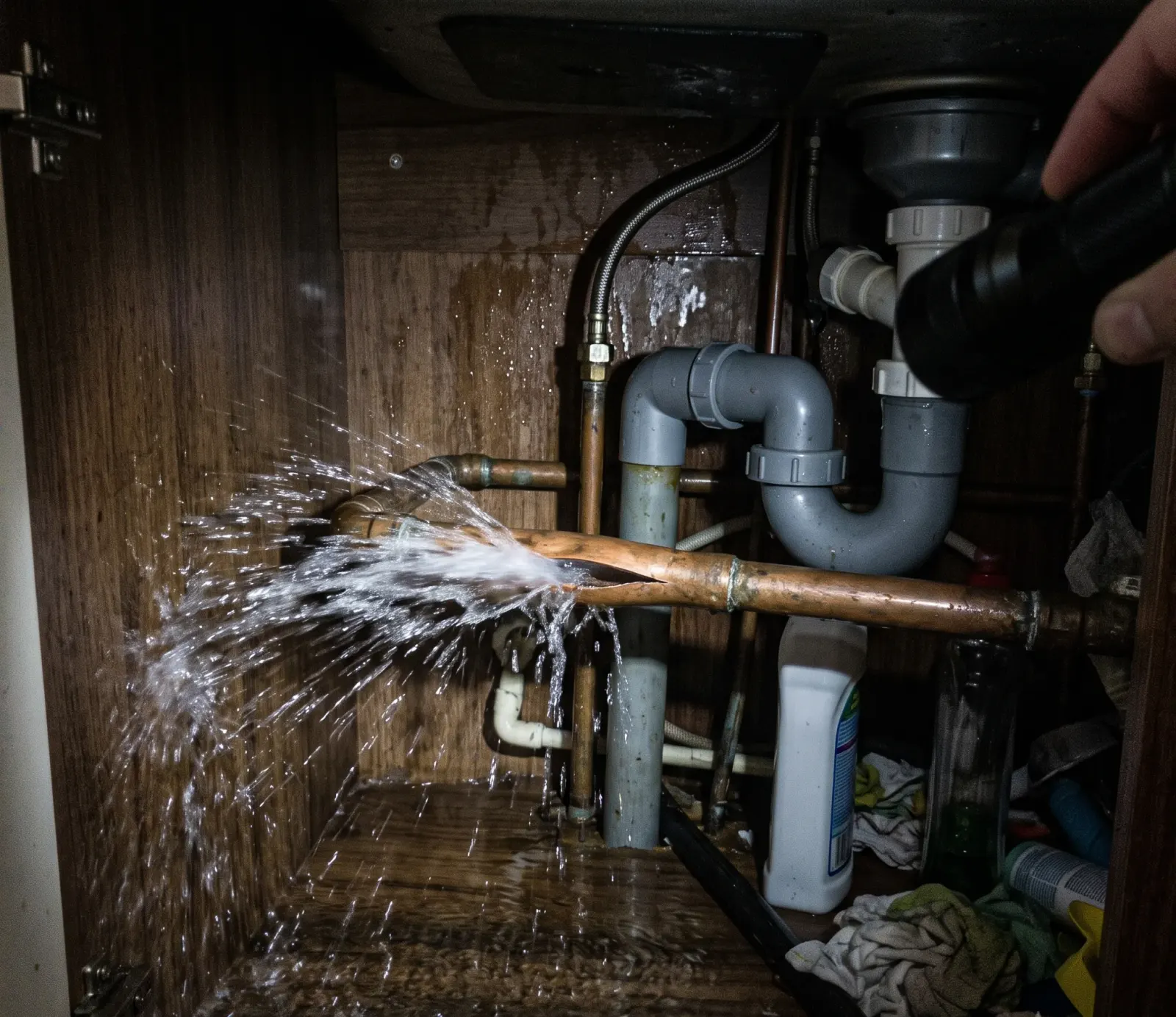
Homes near Liberia and Driftwood built before the 1970s often drain through iron pipe buried beneath the slab, and that metal doesn't last forever. Decades of exposure eat it from within, so a household in Hollywood Hills or Boulevard Heights can face the same slow clog three times in one year before anyone traces it to the pipe itself.
How Cast Iron Corrodes From Inside
A cast iron drain pipe does not fail all at once. Rust builds up along the interior wall of the pipe year after year, narrowing the channel water can pass through. What starts as a slow drain in one bathroom can turn into a recurring backup in the same spot every few months, because the narrowed section keeps catching hair, grease and paper the same way each time.
The Era Behind Hollywood's Older Homes
The corrosion builds in flakes and rust scale on the inside wall of the pipe, narrowing the path water has to travel. Every flush and shower adds a little more buildup until the line can barely keep up, which is why a fix that works for a month rarely holds for a year in these older Hollywood blocks.
A Problem Hidden Under the Slab
Because these lines run under the slab rather than through an open crawl space, nobody sees the corrosion happening. Basements are not part of Hollywood construction, and the shallow water table here makes them impractical generally, so there is no accessible space underneath a house where a homeowner could glance at a pipe and check its condition.
A Repeat Backup Reads Differently
A backup that returns is different from one that happens once. A single clog from an isolated blockage usually clears and does not come back. A backup that repeats in the same drain, especially the lowest fixture in the house, points toward a narrowing pipe rather than a one-time object stuck in the line.
When Several Fixtures Slow Down Together
Slow drainage across multiple fixtures at once is another signal worth noticing. If a sink, a tub and a toilet all drain sluggishly around the same time, that suggests the shared line further down is restricted, not that three separate fixtures developed three separate problems at the same time by coincidence.
Water at the Slab Edge, Not Mid-Room
Water showing up at the edge of a slab, rather than as an obvious flood in the middle of a room, is a pattern tied to this same aging-pipe issue. A line under the slab that has failed tends to push water sideways along the path of least resistance, which often means the perimeter of a room rather than its center.
Terrazzo and Tile Can Mask the Damage
Hard flooring across much of Hollywood's older housing stock won't show a soaked slab underneath it. Tile near Young Circle or a mid-century home closer to Emerald Hills can look untouched on the surface while moisture has already spread sideways beneath it, reaching a wall line well past where the backup actually started.
Why Two Houses Age Differently
Age alone does not guarantee failure on any particular date, which is part of why this is confusing for homeowners. Two houses built the same year on the same block can age differently depending on what has gone down the drains for fifty years and how the original pipe was installed and graded.
Not Every Older Home Is at Risk
None of this means every older house in Downtown Hollywood or Liberia is a ticking clock. It means that a recurring backup in a house from that era deserves a different level of attention than the same backup in a house near Driftwood or Boulevard Heights built with modern PVC drain lines.
Treat the Pattern as Information
A repeated backup is worth treating as information about the pipe, not just an inconvenience to plunge away. Each repeat is the same underlying restriction reasserting itself, and each one that involves standing water is an opportunity for that water to reach flooring, baseboards or drywall before anyone notices.
What to Do With This Pattern
If a backup in a Hollywood home built before the 1970s keeps returning, the pattern described here is common enough to take seriously rather than dismiss. Understanding the pipe age behind the symptom is the first step; anyone who wants the deeper technical picture on the pipe itself can look at the sewer line guide.
Dealing with this in your home?
A ceiling stain days after a storm rarely marks the spot where water got in. On flat-roofed homes near Hollywood Hills or Emerald Hills, water travels along framing before it drops, so the wet insulation and drywall can sit yards from the actual break in the membrane or a clogged drain.