A brown ceiling stain that keeps spreading
A brown or yellow ceiling stain usually means water has already reached the insulation above it. It calls for a licensed assessor to check the attic before anyone assumes what caused it.
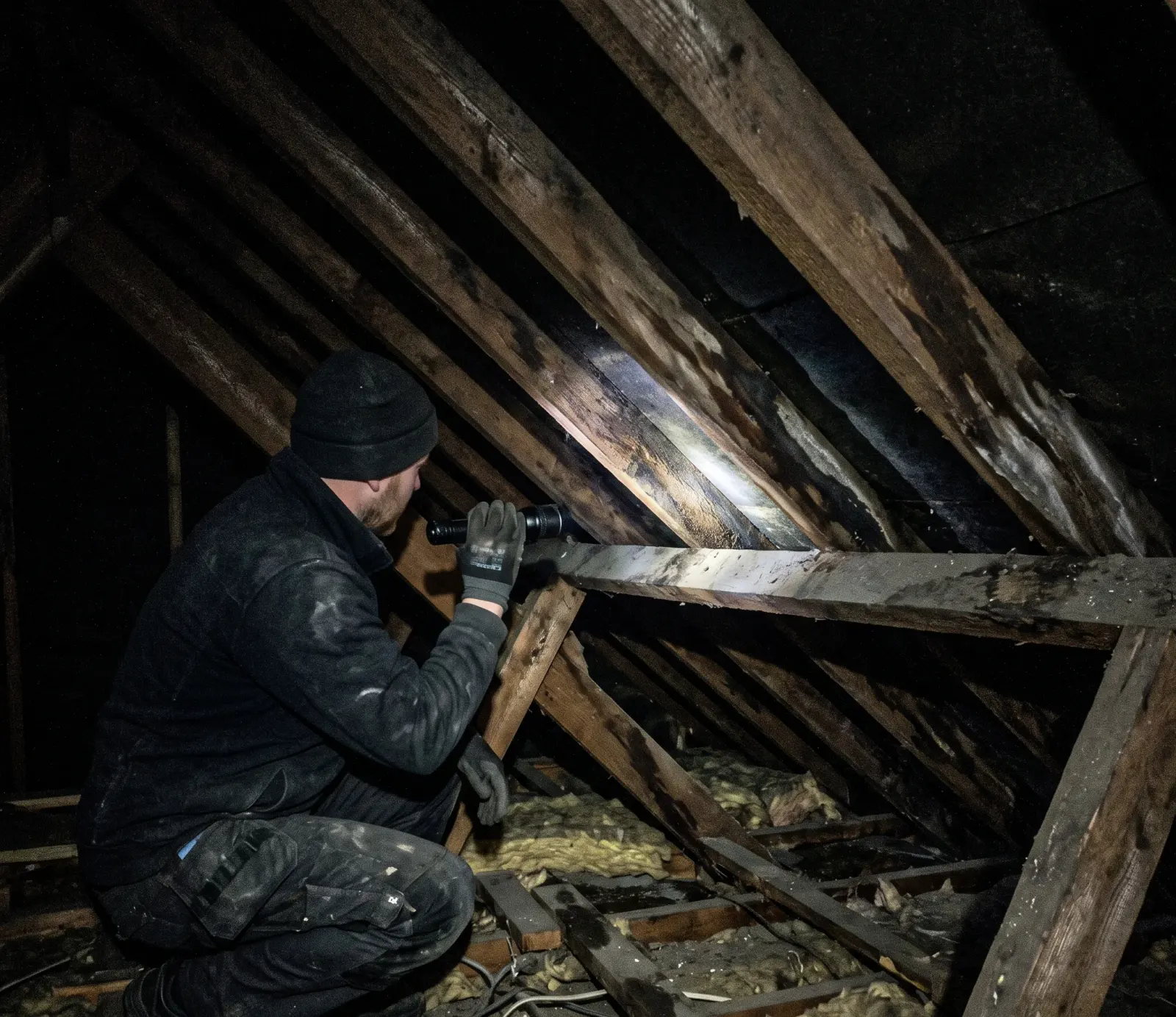
Attic mold risk in Hollywood runs highest through the long rainy season, when heat and humidity both push into roof spaces daily.
Attic mold in Hollywood usually starts from a roof leak, condensation around ductwork or the air handler, or poor attic ventilation combined with the region's year-round humidity. Under Florida law, the mold assessor who inspects and documents the problem generally cannot also be the company hired to remediate it on that same structure, and the reverse is also true, aside from a narrow licensed-contractor exception. Expect an assessment first, a written protocol, then a separately licensed remediator for the physical work.
King tide flooding near A1A and the Broadwalk answered same day
A brown or yellow ceiling stain usually means water has already reached the insulation above it. It calls for a licensed assessor to check the attic before anyone assumes what caused it.
A musty smell from vents or the attic hatch often points to microbial growth on wood or insulation up there. Poor airflow isn't the only cause, but a mold assessment should follow before any repair work.
Dark or fuzzy patches on roof decking or rafters are a direct sign of active growth on that porous material. This needs assessment, not a bleach wipe-down, since surface cleaning misses what's soaked into the wood.
Higher humidity or a damp feel in upstairs rooms can mean attic moisture is working its way down through the ceiling. It's worth having the air handler and ductwork checked along with the attic itself.
Visible rust or standing water in an attic condensate pan means the AC system has been draining somewhere it shouldn't. That moisture has likely already reached nearby insulation or framing.
Attics in Hollywood run hot most of the year, and where ductwork or an air handler sits up there, condensation forms on cool metal surfaces surrounded by warm, humid air. A cracked seal at a roof penetration, a slow leak at a duct joint, or a poorly vented soffit lets that moisture linger against wood decking and insulation, which is exactly what microbial growth needs to start.
A roof leak after a storm, or condensate dripping from an attic-mounted air handler near Hollywood Hills or Emerald Hills, can sit unnoticed above the ceiling for weeks. Insulation holds moisture against the underside of the roof deck, ventilation is often limited, and by the time a stain shows on the ceiling below, the growth has usually been active a while.
Hollywood's humid, rain-heavy season overlaps hurricane season, and the EPA notes wet materials can start growing mold within 24 to 48 hours if left to sit. With ambient humidity already high near the Intracoastal Waterway and West Lake Park, drying a home out fast matters more here than in a drier climate.
roof leak stains vs active growth. Attic mold gets confused with ordinary attic dust or insulation discoloration, since both can look dark or fuzzy from below without a closer look. It also gets mixed up with roof leak staining alone, when the staining is really evidence of a moisture intrusion event that then triggered separate microbial growth on the wood or insulation. The distinction matters because dust and staining alone don't need remediation, while active growth on porous material generally does, and only a licensed mold assessor can reliably tell the two apart during an inspection.
A licensed mold assessor inspects the attic first: checking roof sheathing, rafters, ductwork, and any air handler equipment for affected materials, moisture readings, and the likely source, whether that is a roof leak, condensation, or ventilation problem. They document what they find and can write a remediation protocol describing the scope of work. Under Florida's rule, that same assessor's company generally cannot then be hired to perform the remediation itself on that same attic within twelve months, aside from the narrow contractor exception.
Ductwork and any air handler equipment sitting in the attic get evaluated for whether they pulled moisture into the space or gave growth a way to spread past it. Insulation and roof decking that stayed wet get treated as porous material likely to need removal rather than cleaning, while framing and other structural wood are handled based on how deep the growth sits. The scope stops there — it's written up, not carried out, by whoever assessed the attic.
Slab foundations sit close to the water table across Hollywood, from Hollywood Lakes to Emerald Hills, which limits how a wet slab or wall base can dry on its own. Add the humidity typical of this area and materials left damp near the Intracoastal Waterway or inland toward Liberia stay wet longer than most owners expect, not less.
| Local Flood Damage Support | Serving Hollywood Homeowners |
|---|---|
| Serving Hollywood from Young Circle to the Broadwalk | Licensed Mold Remediation |
| Humidity in Hollywood turns a wet wall into mold within days | Fast Local Response |
| Serving Downtown Hollywood, Hollywood Hills, and the Broadwalk area | Serving Hollywood Lakes to Emerald Hills |
Attic mold in Hollywood usually traces to the air handler and ductwork sharing that space. A blocked condensate line, a rusted drain pan, or ductwork sweating from Hollywood's relative humidity can leave affected materials wet long enough for microbial growth to take hold, especially on porous material like roof decking or insulation near Hollywood Lakes, Hollywood Hills, or Emerald Hills homes with limited attic ventilation. Poor moisture intrusion control after a prior roof or AC event compounds it. This can affect indoor air quality, and some people report symptoms, but no page here diagnoses a condition or promises a health outcome. Florida keeps mold assessment and mold remediation as separate licensed roles: a mold assessor who evaluated a structure generally cannot be the mold remediator on that same structure within the following year, and a remediator who worked on it cannot later assess it, aside from a narrow exception for a certain licensed contractor. Homeowners near Young Circle or Downtown Hollywood should expect two separate companies, a written assessment first, and post-remediation verification afterward. What follows: how assessment differs from remediation, what triggers each, and what containment in an attic space actually involves. Questions this leaves a reader wanting to ask: - Who pays for attic mold removal when a condo's shared roof or AC lines caused it? - What does post-remediation verification in an attic actually check? - How long does containment take for an attic before affected materials are cleared?
Attics in Hollywood run hot and humid for most of the year, and that alone creates conditions favorable to microbial growth on roof sheathing, rafters, and any ductwork or air handler equipment tucked up there. The likelier trigger is moisture intrusion from a roof leak, a damaged vent boot, or condensation where ducted air meets attic heat, since a poorly insulated or leaking supply line can sweat onto wood and insulation for weeks before anyone notices. Homes near Hollywood Lakes, Emerald Hills, and Hollywood Hills carry the same attic exposure as anywhere else in the city, since the driver is roof condition and ventilation, not neighborhood. Once wood sheathing, insulation, or other porous material stays damp, growth can spread along framing faster than it shows on the ceiling below.
A homeowner can look for water stains on the attic ceiling, check that attic vents and ridge vents are not blocked, and glance at ductwork and the air handler for visible condensation or rust on the drain pan, since a slow AC leak is a common quiet source of attic moisture in Hollywood's climate. Running a dehumidifier or fixing an obvious roof leak on a small, dry, early-stage spot is reasonable. But once growth covers a wide area of sheathing or insulation, or the source isn't obvious, a licensed mold assessor should look at it before anyone starts pulling out material, since disturbing affected areas without containment can spread it further into the house.
Attic air rarely stays sealed off from the rooms below it. Return leaks, a poorly sealed attic hatch, and ductwork that runs through that same hot, humid space all give attic conditions a path into the air a Hollywood household actually breathes, so attic microbial growth is treated as an indoor air quality question and not just a roofline problem. Some occupants describe irritation or discomfort when a home has a musty attic, and that's worth taking seriously enough to have it looked at. None of that amounts to a diagnosis, and nobody should be told this particular growth is the cause of a specific illness, because that link isn't something a mold inspection can establish. What can be established is whether elevated moisture or visible growth is present, and that documentation is what the assessor's report is for.
A stain on a Hollywood Hills ceiling or a damp closet near Liberia rarely stays small on its own. The sooner someone qualified looks at where the water actually came from, whether a roof, a supply line, or a backed-up lateral, the fewer materials end up needing to come out. Reach out and the licensed pros we connect you with will walk you through it.Once damp material near Hollywood Lakes or Emerald Hills has sat long enough for growth to start, the job stops being a drying job. Assessment and remediation carry their own line items apart from extraction, and you want both numbers written down before anyone begins rather than explained afterward. pricing guide.
Drywall and microbial growth in Hollywood. Drywall mold in a Hollywood home usually traces back to moisture that got behind the paper facing and stayed there — a slow AC condensate leak, a roof or window intrusion, or humidity that never fully left the wall cavity.
Mold Under Flooring in Hollywood Homes. Mold under flooring in Hollywood usually starts with moisture that reaches the underlayment or slab without drying, often from a slow air handler condensate leak, a prior water event, or humidity working up from below tile or terrazzo.
Microbial growth inside the HVAC system. Air handler and duct mold in Hollywood, FL usually starts from AC condensate, since the system runs nearly year-round and produces moisture continuously through the drain line and pan.
Not usually by itself. Florida law generally keeps mold assessment and mold remediation as separate roles performed by different licensed companies on the same structure within a twelve-month period, with a narrow exception for certain licensed contractors. Ask upfront which license the company holds before scheduling attic work in Hollywood.
Look for water staining on the attic ceiling, condensation or rust near the air handler's drain pan, or visible growth on rafters and insulation. Hollywood's humidity and long AC season make slow condensate leaks a common quiet cause. If you see any of this, a licensed mold assessor should inspect before anyone disturbs the material.
No. Under Florida's mold licensing rules, whoever inspects your attic for growth generally cannot be hired to clean it up, and whoever does the cleanup generally cannot have been the one who inspected it first. That split exists to keep the diagnosis honest and separate from the repair bill. The narrow exception is a licensed Division I contractor handling both, with disclosure of your right to seek other bids.
Not on its own. Attic heat and moisture affect indoor air quality, and some people report symptoms around microbial growth, but no assessor or remediator can diagnose an illness or promise a health outcome from it. What they can do is document moisture intrusion and affected materials, and recommend remediation and post-remediation verification.
A sewer lateral running under a slab near Hollywood Boulevard or Sheridan Street is the homeowner's line, and backups blamed on the house drain sometimes start there instead.
Call (954) 676-1222