Condo & HOA Properties
Condo & HOA Water Damage, Hollywood, FL
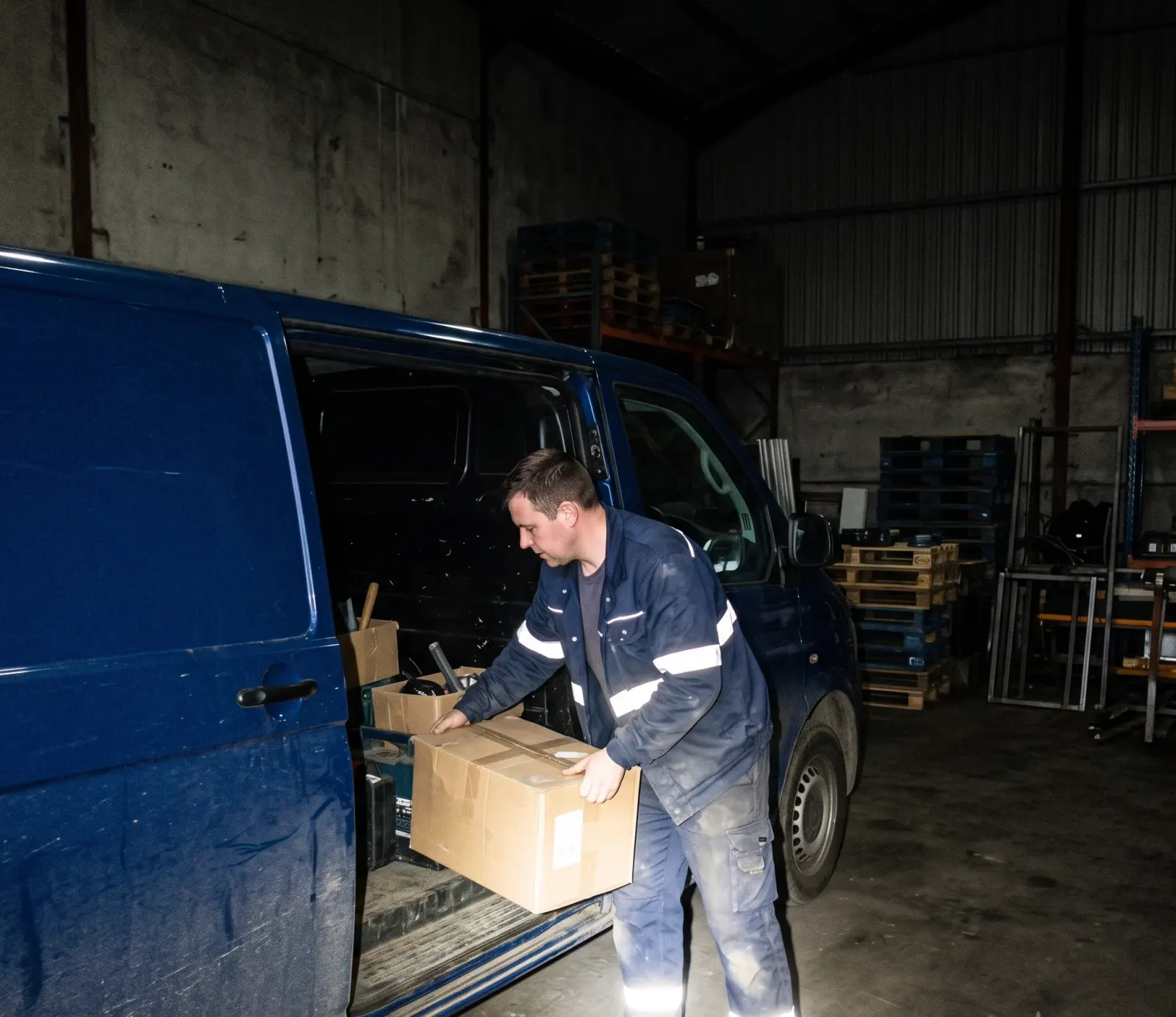
Large-footprint response built around protecting inventory, racking, and equipment, not office square footage.
Warehouse and industrial water damage in Hollywood, FL centers on protecting inventory, floor-level equipment, and large open floor plans from standing water and the humidity it spreads. The licensed pros we connect you with extract water, assess stock and equipment, and dry the full footprint, not just the visible wet area.
Warehouses and industrial buildings near Port Everglades and along Interstate 95 carry inventory, pallet racking, and equipment across large open floor areas, so a single roof leak or burst line does not stay contained to one room. Water finds the low point in a slab that may run the length of a football field, and by the time it is visible at the far wall it has already traveled under stock stored close to Hollywood Boulevard corridors and similar industrial stretches.
A warehouse near Pines Boulevard or University Drive can lose a full shift of receiving or shipping while pallets sit in standing water, and racked inventory a few feet off the slab is not automatically safe if the leak came from above. Downtime on a distribution floor compounds fast: one flooded aisle can block forklift access to unaffected sections, which turns a contained spill into a facility-wide slowdown.
Rain-driven street flooding and king tide events have put standing water on Hollywood streets in past years, and a warehouse near a low-lying stretch is exposed to water pushing in at loading dock doors and ground-level seals, not just water coming from above. The licensed pros we connect you with look at both directions before deciding where the water actually came from.
Inventory loss is the real cost driver on a warehouse claim, more than the building itself. Pallets stored directly on a slab, or stacked low on open racking, sit right where floor water travels first, and cardboard, paper stock, and unsealed goods can wick moisture within hours. Getting affected stock identified and moved is usually more urgent than drying the structure.
Equipment on the floor, conveyor lines, and electrical panels mounted at low height are all exposed the same way inventory is. Standing water near powered equipment is a safety stop before it is a drying job, and the licensed pros we connect you with will treat power isolation in the affected area as the first step, not an afterthought.
| Risk Area | What's Exposed | Why Speed Matters |
|---|---|---|
| Warehouse & industrial | Inventory loss, floor-level equipment, large open-floor drying | Shipping schedules, tenant leases, safe forklift and foot traffic |
| Racking and pallet storage | Wicking up cardboard and pallets before anyone spots the leak | Isolate the aisle, get airflow moving, check inventory row by row |
| Concrete slab floors | Water tracking under racking and pooling in low bays unseen | Moisture-map the slab, extract standing water, dry before it wicks upward |
| Loading dock and dock doors | Rain and stormwater pushing in under dock seals during a downpour | Seal the entry point, pull standing water, protect adjacent stock zones |
| Flat or low-slope roofing | A blocked roof drain ponding water that finds a ceiling seam | Trace the leak path, protect equipment below, dry the structure fully |
| Electrical and machinery bays | Standing water near panels and motors before power is confirmed safe | Hold the area until power is cleared, then extract and dry |
| Mezzanine and office pockets | A leak above dripping into paper files or a break room ceiling | Contain the drip point, dry the pocket, check the floor below |
| Downtime and shipping schedules | Every closed hour delays outbound freight and inbound receiving both | Work in sections so part of the floor can stay operating |
Downtime on a warehouse or industrial building is measured differently than on a small office. A distribution operation near Port Everglades or the airport corridor running on shipping schedules cannot simply close for a week the way a retail storefront might; contracts and delivery windows keep moving whether the floor is dry or not.
Large open floor plans mean drying equipment has to be deployed at industrial scale, not the handful of units a home or small office needs. Getting airflow and dehumidification across a wide slab area quickly, without shutting down operations in unaffected sections, is what keeps part of a facility running while another part dries.
Hollywood commercial properties are also subject to the state's hurricane deductible and the same claim notice window that applies to homes, so a facility manager filing after a storm should not assume the paperwork works the same way it did before 2023. Keeping dated photos of racking, product, and the point of water entry gives the adjuster something concrete instead of a verbal account weeks later.
Florida law sets a one-year deadline, extended to eighteen months for supplemental claims, to notify an insurer of property damage. On a warehouse claim covering both structure and inventory, that clock does not wait for a slow damage assessment, so getting affected stock counted and the source of the water identified early matters for the paperwork as much as for the drying.
Facilities in Hollywood's industrial corridors, whether near US-1, Interstate 95, or Florida's Turnpike, face the same rainy-season and storm exposure as the rest of the city, just at a larger physical scale. The licensed pros we connect you with document the affected footprint, the inventory involved, and the point of water entry before drying begins, because that record is what an insurer and a facility manager both need afterward.
A warehouse in Hollywood carries inventory value, not just building value. Water moving across a concrete floor reaches pallets, cardboard, and packaging fast, and cardboard wicks moisture upward into stacked goods long after the standing water is gone. The pros we connect you with assess what stock can be dried, what has to be written off, and document it for the claim.
Warehouses near Port Everglades and industrial buildings along US-1 hold inventory in ways offices never do: pallets stacked floor to ceiling, wrapped stock that traps moisture inside itself, and equipment with motors and control panels low enough to catch rising water. A rain-driven flood event doesn't stay contained to one aisle. The licensed pros we connect you with prioritize inventory triage and equipment shutdown before drywall, because in a facility this size, product loss usually outweighs the building damage.
A warehouse near Port Everglades or along Interstate 95 does not shut down quietly. Downtime affects shipping schedules, tenant leases, and staffing, and every day a floor stays wet is a day forklifts and foot traffic can't move through that section safely.
Electrical panels, conveyor motors, and HVAC equipment sit at floor level or close to it in most industrial buildings, and water reaching any of it turns a flooring problem into an equipment problem. Getting extraction started before that happens is the difference between drying a floor and replacing machinery.
Large open floor plans dry differently than a small office. Air has to move across the whole footprint, not just the wet corner, or humidity redistributes into dry racking and product elsewhere in the building. The pros we connect you with size equipment to the actual square footage, not a guess.
From the Broadwalk to Downtown Hollywood, coverage across every neighborhoodEmerald Hills, Liberia and Hillcrest. Slab leaks and drying delays common in Hollywood Hills and Boulevard Heights concrete block homes
Hollywood Lakes homes and Hollywood Hills homes sit on slab, not basement, so water spreads sideways under baseboards fast. Add year-round humidity and drying stalls before it starts. Ask the licensed pros we connect you with how soon they can get moisture readings started.A commercial space near Port Everglades or Young Circle carries its own drying math once flat or low-slope roofing is involved, since a ceiling stain can sit far from the actual leak. Ask for a scope that names the source before it names a price. pricing guide, and the commercial overview covers how a scheduled program works.
Condo & HOA Water Damage, Hollywood, FL
Hospitality Water Damage, Hollywood
Restaurant & Food Service Water Damage
Warehouses along the industrial corridors near Interstate 95 and Florida's Turnpike often store pallets on the floor, which means the first inches of standing water reach product before anyone notices a leak. A quick assessment sorts what got wet from what stayed dry, checks moisture inside cartons and shrink wrap, and gives a straight read on what can be dried in place versus what has to move out for the floor to be reached.
Yes, if the loss is inside a warehouse leased to a business, Florida Statute 83.51 puts the roof, exterior walls, and plumbing on the landlord to keep in reasonable repair. A tenant storing inventory in a Hollywood facility should still document the damage right away, because responsibility for the building shell and responsibility for the goods inside it are not the same claim and often go to different insurers.
A flat commercial roof only sheds water while the membrane and drains are working, and a blocked drain on a warehouse roof near Port Everglades or the airport corridor can pond for hours before it finds a seam and drops onto stock below. The leak often shows up on the ceiling well away from where the water actually entered, so tracing the source matters before repairs start.
Get the claim moving fast, since Florida law now sets a one-year window to notify your insurer of new water damage and eighteen months for a supplemental claim on an existing one. For a warehouse near Port Everglades or off I-95, that clock runs whether or not the building is fully dried out yet, so document the loss and file before the deadline rather than waiting on repairs to finish first.
If a Hollywood warehouse or industrial building has standing water, a soaked subfloor, or a roof leak spreading across storage racks, describe what's flooded and what's stored there. The write-up connects you with licensed local pros suited to a large-footprint building, not a small office suite.
Call (954) 676-1222