A burst water heater in Hollywood, FL can empty forty gallons or more onto a tile or terrazzo floor within minutes, and because that flooring sits straight on the slab, water spreads sideways under it fast. The first move matters more than the size of the tank. Shutting off the right valve stops the flood at its source.
Find the water heater shutoff first
Every water heater has a cold-water supply valve on the pipe entering the top of the tank. Turn it clockwise until it stops. If it is corroded or will not budge, the main shutoff for the house does the same job and is worth knowing the location of before an emergency, not during one.
Cut power or gas to the tank
An electric water heater needs its breaker switched off at the panel, not just the unit powered down, since an element left energized in a near-empty or leaking tank can fail further. A gas unit has its own gas valve at the tank; turn it to off. Do not touch either if you are standing in water.
Move anything the water can reach
Because terrazzo and tile do not absorb water, it travels along the floor toward baseboards, cabinets and the nearest wall line before anyone notices. Pull rugs, boxes, and furniture legs off the wet floor right away, and check under nearby cabinets in the kitchen or laundry area where the tank often sits.
Mop and blot, do not scrub
Standing water on hard flooring in a Hollywood home can look worse than it is, and it can also hide worse damage than it shows. Use towels or a wet-dry vacuum to pull up what is sitting on the surface. Scrubbing or spreading the water around only pushes it into more baseboard and grout lines.
Check the wall behind the tank
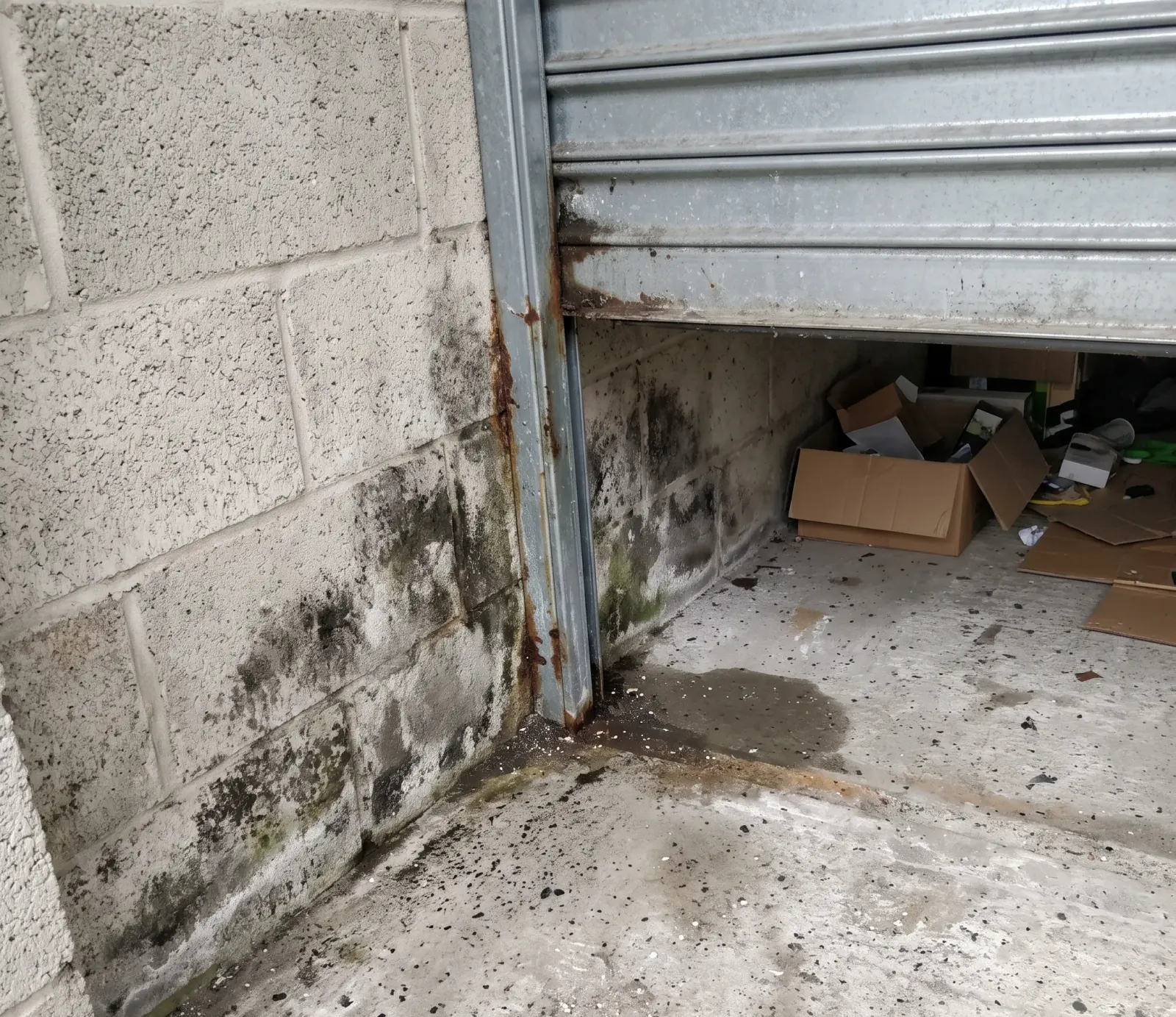
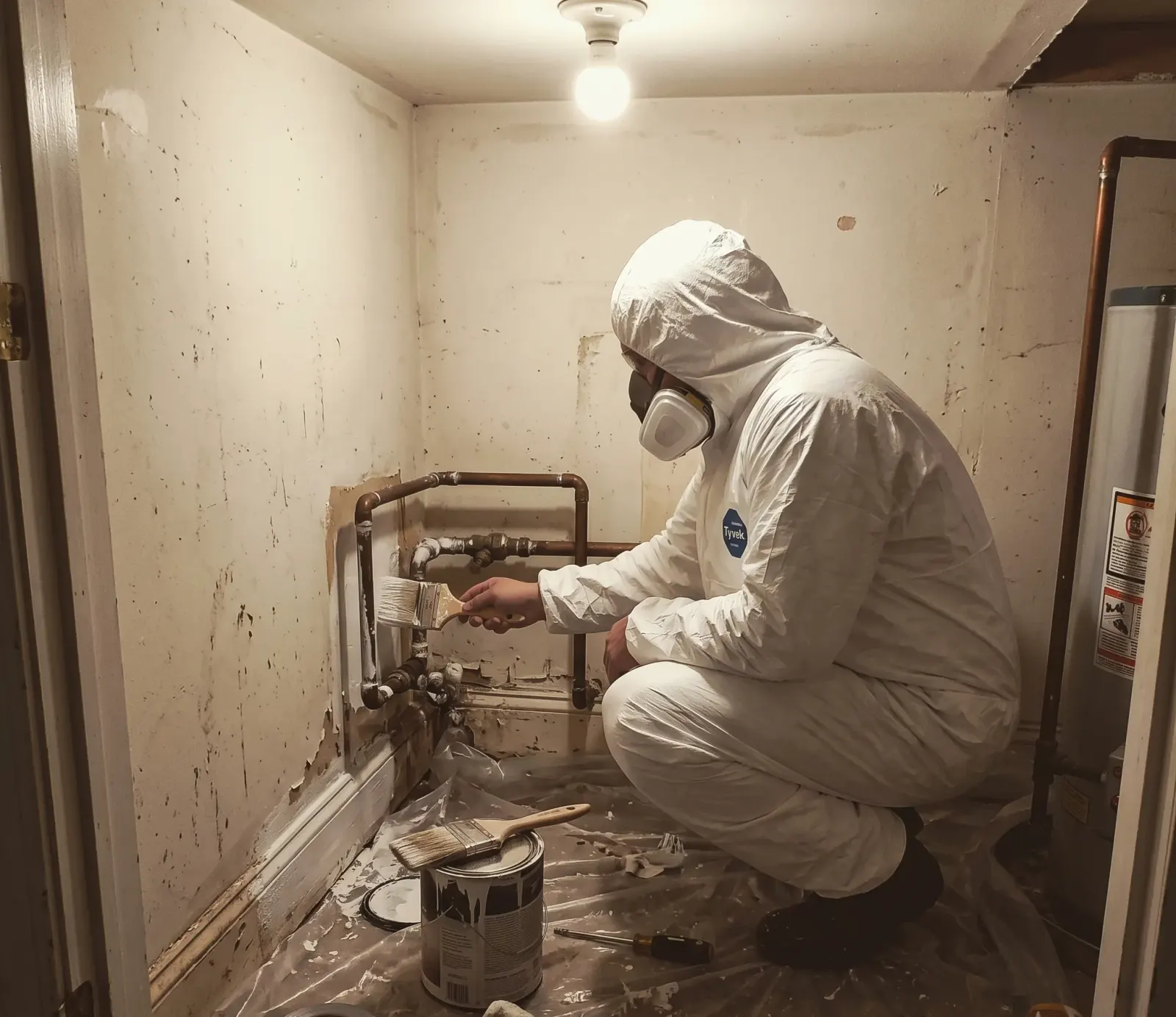
Most Hollywood homes have concrete block walls with drywall mounted on furring strips, and that gap is exactly where a slow leak behind a water heater goes unnoticed. Press along the baseboard near the tank; if it feels soft or the paint has started to bubble, water has already gotten behind the surface.
Photograph the damage before drying starts
Take pictures of the tank, the water line on the floor, and any affected walls or cabinets before you move furniture back or start drying in earnest. An insurance claim moves faster with a clear record of what the water reached and how far it traveled through the room.
Get air moving through the room
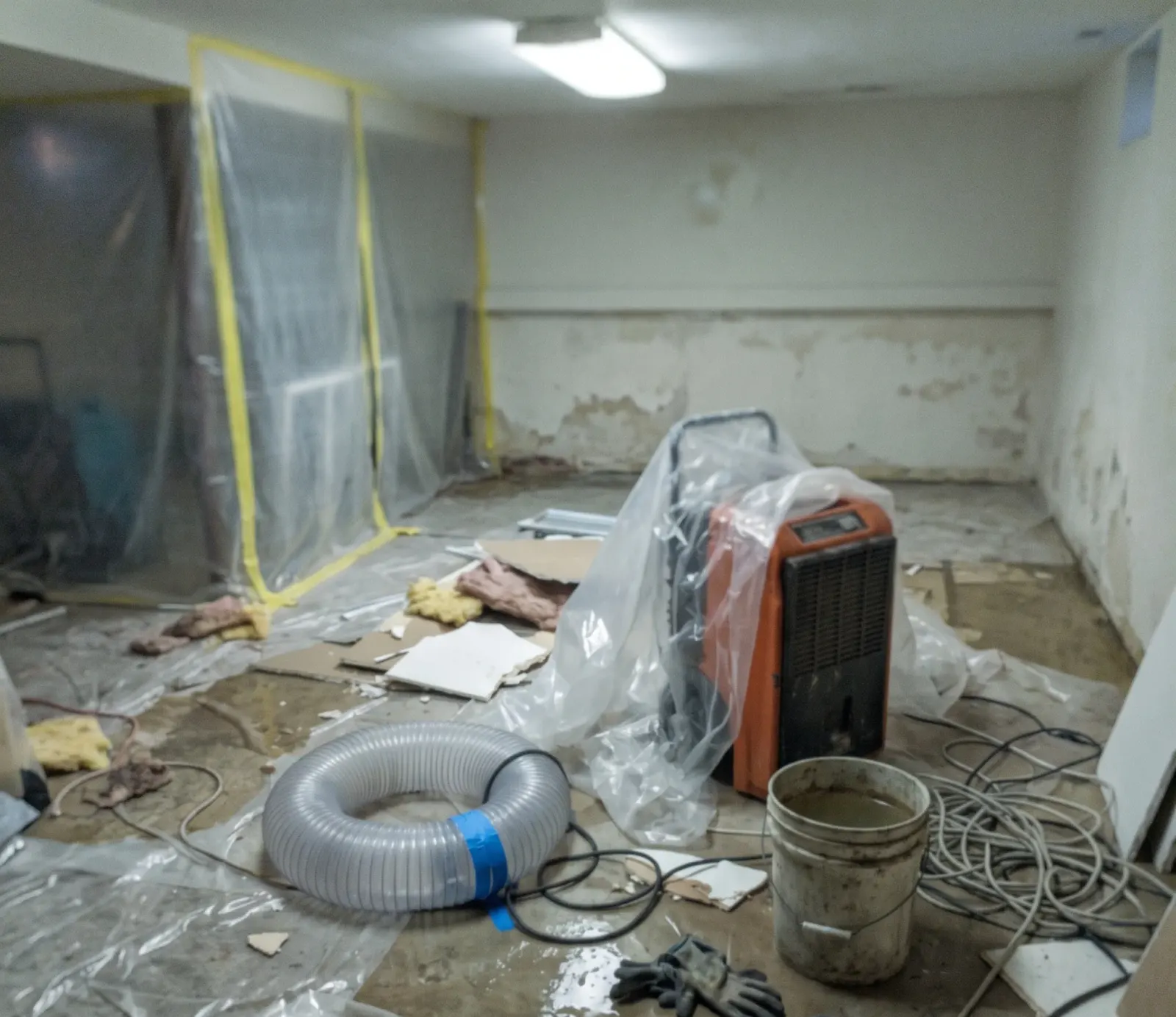
Open interior doors and run the air conditioning if it is working, since Hollywood's air conditioning already runs most of the year and helps pull humidity down. Point a fan at the wettest section of floor. This will not dry a saturated slab or wall cavity, but it slows mold growth while you arrange next steps.
Know what a moisture reading actually shows
A dry-feeling floor or wall the next morning does not mean the water is gone. Block walls hold moisture in their hollow cores long after the painted surface feels fine, and a reading taken on that surface says very little about what the block behind it is still holding.
Call your insurer the same day
Florida law sets a deadline for reporting a property claim, so contact your insurer as soon as the water is stopped rather than waiting until the floor looks dry. Ask what documentation they want and whether they require the loss reported in writing, and keep your photos ready to send.
Renting changes who handles the pipe
Take photos of the tank, the water line, and any flooring or baseboards affected before you move or dry anything. Note the time the leak started if you know it. Insurers under Florida Statute §627.70132 work against a claim-notice deadline, so write down what happened while it's fresh rather than trying to reconstruct it later from memory.
When to bring in a professional
A single wet floor mopped up quickly might dry on its own. Water that reached a wall, sat for more than a few hours, or came from a tank that failed while you were out is a different situation, and the licensed pros we connect you with can check what the slab and block walls are still holding.
Dealing with this in your home?
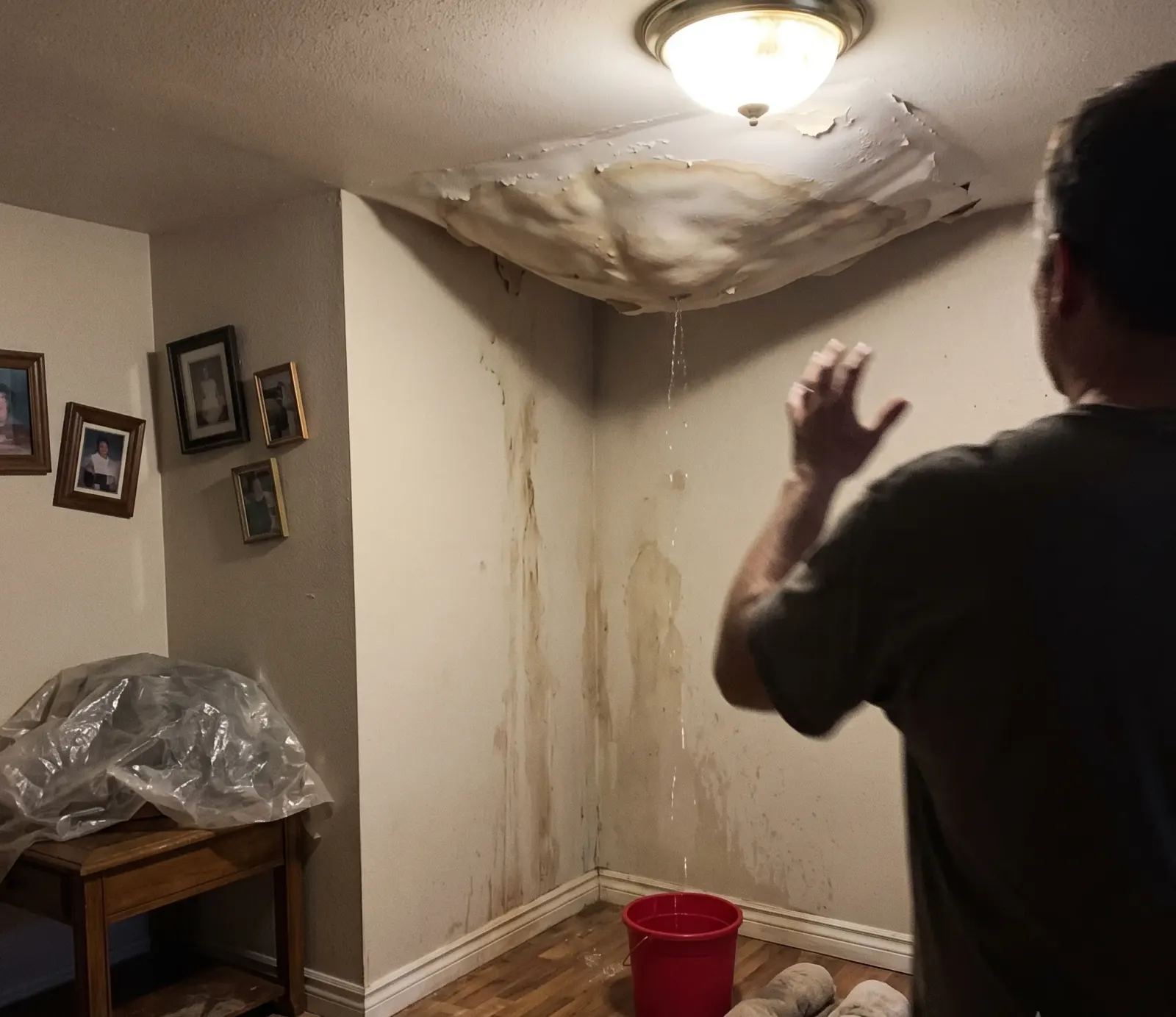
A ceiling stain days after a storm rarely marks the spot where water got in. On flat-roofed homes near Hollywood Hills or Emerald Hills, water travels along framing before it drops, so the wet insulation and drywall can sit yards from the actual break in the membrane or a clogged drain.